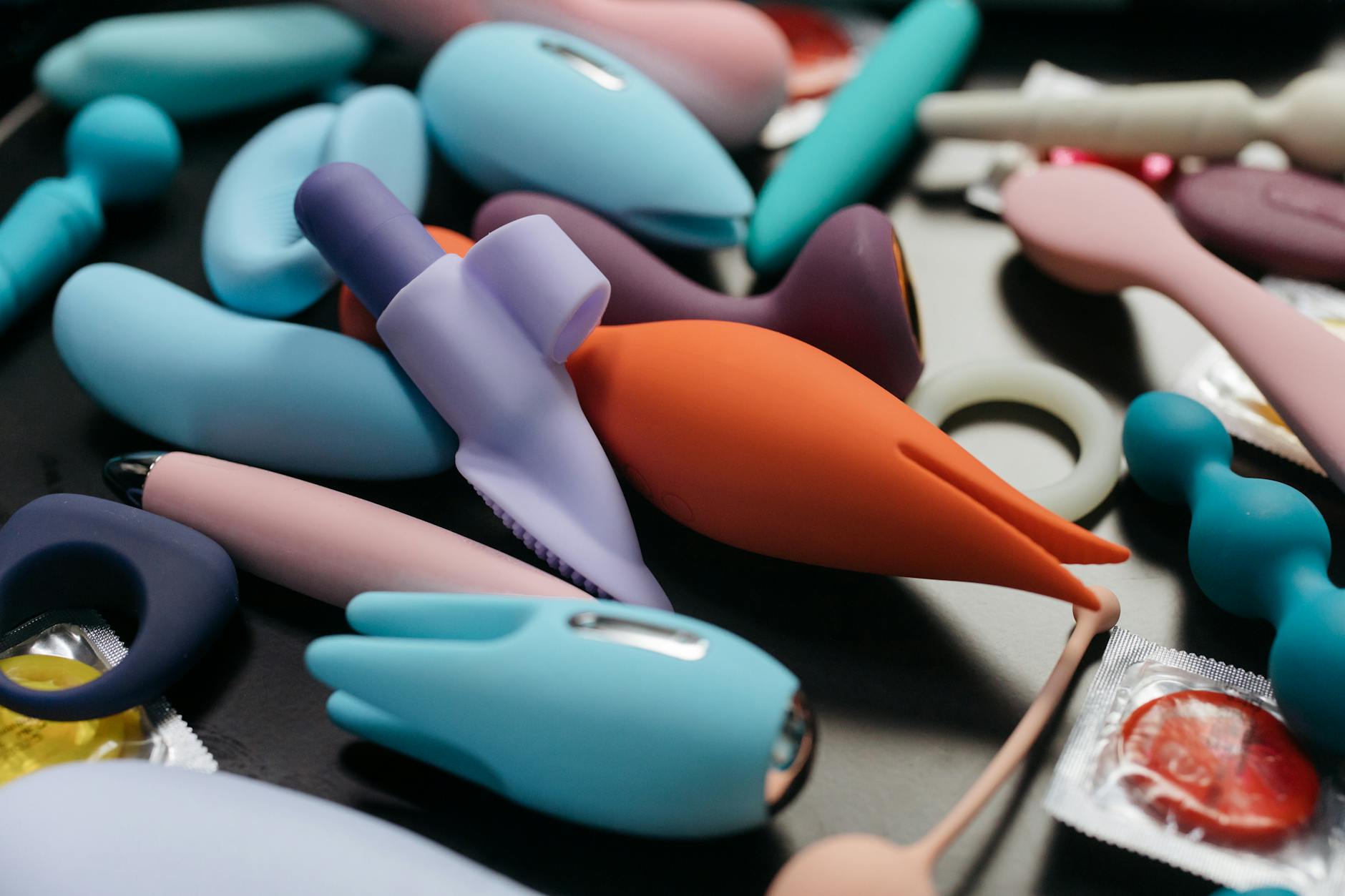
The truth about sensitive tissue and vibrators
Let's be real. Sensitive clitoral tissue doesn't mean you can't use a vibrator. It means you need to pick one deliberately instead of grabbing whatever's popular or loudest.
Sensitivity shows up differently for everyone. For some people, it's raw nerve endings that feel overstimulated by standard vibration patterns. For others, it's irritation from materials, or numbness that makes high-intensity toys feel like you're working too hard for nothing. Some folks have all three. None of it is a sign that pleasure isn't available to you. It's a sign that you need different tools.
Here's what I see in my practice: people with sensitive tissue often abandon vibrators entirely because they're chasing the "right" experience instead of asking what their body actually needs. Then they find the one that works, and it changes everything.
Why clitoral sensitivity happens in the first place
Three main culprits.
Nerve density and exposure. The clitoris has over 8,000 nerve endings packed into a tiny space. If your anatomy is naturally more exposed or if you have a smaller clitoral glans, the same vibration intensity that feels moderate to someone else can feel raw on you. That's not better or worse. That's just your wiring.
Hormonal fluctuation. Estrogen affects tissue thickness and sensitivity throughout your cycle. Days before your period, your clitoris can feel tender even without any stimulation. Some people find their sensitivity peaks mid-cycle; others peak just before menstruation. Tracking your response across a month tells you more than any general rule.
Micro-abrasions and irritation. If you've been using a vibrator that's too intense, or if the material isn't body-safe, you might have developed sensitivity as a protective response. Your tissue is literally inflamed. That usually resolves within a few days of switching tools, but it's important to know that the sensitivity isn't permanent.
Material matters more than you think
The first filter: what your vibrator is made of.
Body-safe silicone is non-porous, hypoallergenic, and smooth. It won't harbor bacteria or degrade over time. If you have genuinely sensitive tissue, silicone is the only material worth considering. Glass and stainless steel can work too if your tissue tolerates them, but silicone is the safest default.
Avoid anything labeled "jelly," "TPE," or "PVC." Those materials are porous, leach chemicals, and often trigger irritation in sensitive areas. I know they're cheaper. They're also not worth the inflammation.
Seam quality matters. A rough seam or a toy with a seem at all can create micro-friction that feels fine on average tissue but feels painful on sensitive tissue. The smoother the finish, the better. When you're shopping, run your finger along the toy before buying. Rough edges are a red flag.
Pattern selection is where most people get stuck
You don't need the "strongest" vibrator. You need the right pattern.
Here's the distinction: intensity and pattern are different things. Intensity is how hard the vibrator is vibrating. Pattern is how that vibration moves. Someone with sensitive tissue often does better with a gentler intensity but a complex, varied pattern. Conversely, constant high intensity on a single, simple pattern is what actually causes burnout.
Low-intensity patterns include pulses that turn on and off rhythmically, instead of continuous buzz. Waves that roll across the head instead of hammering straight down. Ramps that build and release instead of staying flat. If you're exploring for the first time with sensitivity, start with patterns labeled "pulse" or "wave" on a setting you'd rate as 2 or 3 out of 10.
Many people assume they need constant vibration. Actually, the breaks in the pattern are what let your nerve endings reset and stay responsive. This is why clitoral suckers like the Lemon line work well for sensitive tissue. The suction pattern naturally includes micro-breaks that prevent desensitization.
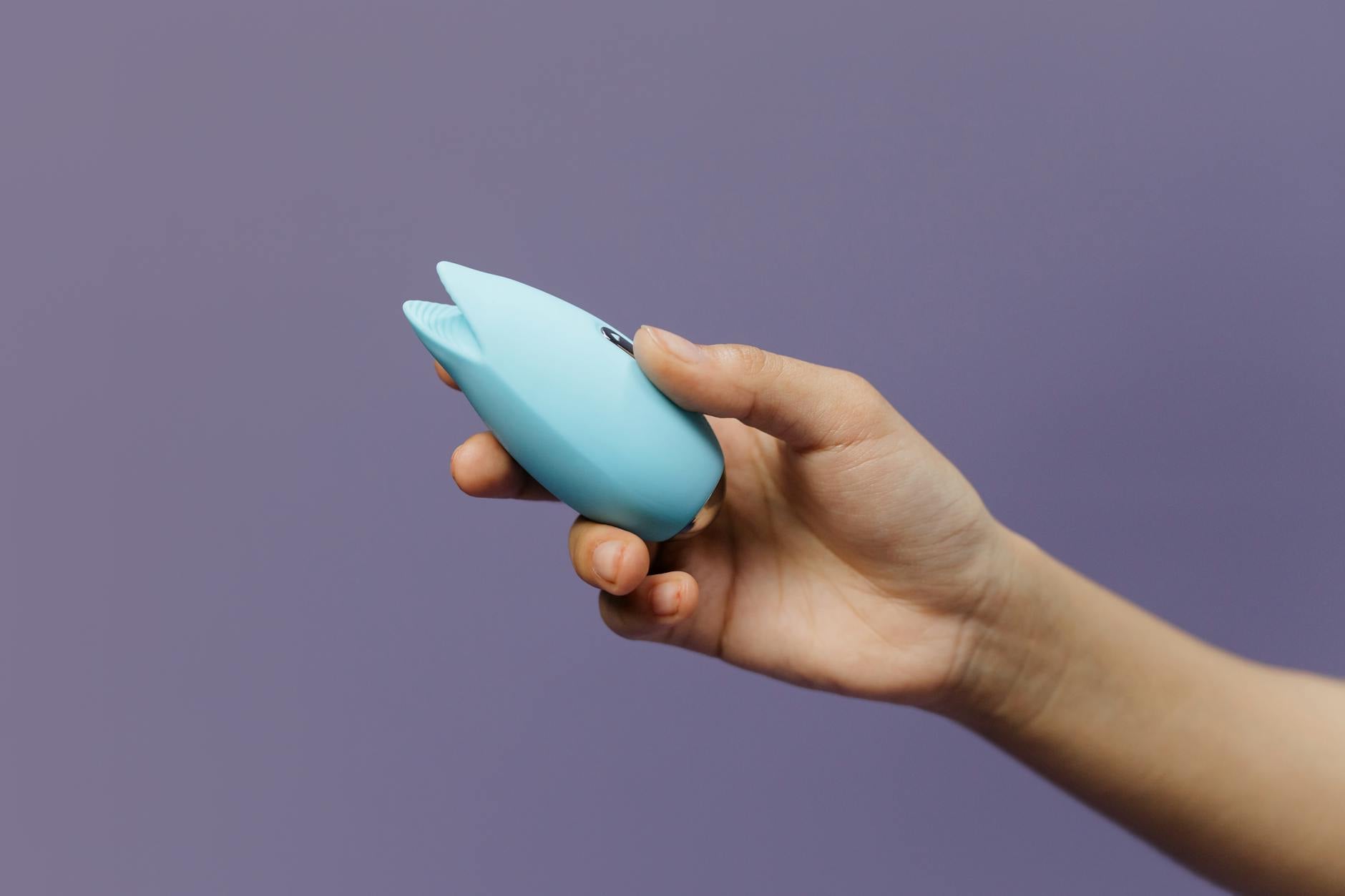
Photo by cottonbro studio on Pexels
How suction-based toys differ from traditional vibrators
If you've only used traditional vibrators, clitoral suckers might feel foreign. Here's why they're often better for sensitive tissue.
Traditional vibrators stimulate through direct vibration. A clitoral sucker stimulates through gentle suction plus vibration. The suction creates a seal around the clitoris and works the entire pleasure area, not just the tip. This distributes sensation more evenly, which means you're not concentrating all that intensity on one tiny spot.
For people with sensitive tissue, this feels less overwhelming. The sensation builds slower. You have more control. And because the pattern includes natural pauses, your nerve endings don't get worn out.
Lemon Wand's lemon clitoral vibrator uses suction-based technology. It has multiple intensity levels and patterns that you can dial up gradually. Most people with sensitivity start on patterns 1 or 2, which feel almost gentle, and work up if they want to. Some never go higher. Both are perfectly fine.
The warm-up time principle
Here's something that changes everything: sensitive tissue often responds better to a longer warm-up.
When you rush into stimulation, your body doesn't have time to produce natural lubrication, and your clitoris stays less engorged. That means the tissue is actually more fragile. Spending 10 to 15 minutes on foreplay, touch, or just breathing before you introduce a vibrator gives your body the chance to prepare. The tissue becomes plumper, more elastic, and more ready to receive stimulation without irritation.
Then when you introduce the vibrator, start on the lowest setting. Spend a few minutes there. Your clitoris will continue to engorge and become more receptive. Only then, if you want, move to a higher intensity or a more complex pattern.
This isn't a workaround. It's actually how pleasure is supposed to work, whether your tissue is sensitive or not. You're just being intentional about it.
Lubrication changes everything
You might think lubrication is only for penetrative sex. Actually, it's one of the most underrated tools for clitoral play.
A water-based lubricant creates a buffer between your vibrator and your tissue. If your clitoris is on the drier side, or if you're sensitive to direct friction, adding lube can make a massive difference. You're not covering up the sensation. You're actually making it more available by reducing micro-friction.
Apply a small amount directly to your clitoris before you introduce the vibrator. Reapply as needed. Most people find that lubrication lets them stay responsive longer without fatigue or irritation.
One heads-up: if your vibrator is silicone, use only water-based lube. Silicone lube can degrade silicone toys over time. It's not worth the convenience.
Communication with partners, if you have one
If you're exploring clitoral vibrators with a partner, the biggest mistake couples make is treating sensitivity like a problem to fix rather than information to work with.
Your partner doesn't need to feel like they're "not enough." A vibrator isn't a replacement for their touch. It's an expansion of what's possible for your pleasure. Some of the most connected couples I work with use toys as part of their intimacy, not as a way around it.
Talk about what you're doing before you do it. Tell your partner what patterns feel best. Show them how you like to warm up. If they're watching, or helping, or just present, they're part of the experience. That shared knowledge often deepens intimacy in ways that solo exploration doesn't.
When to see a specialist
If you've tried multiple toys, patterns, and approaches and your tissue still feels raw, irritated, or numb, talk to a gynecologist. Sometimes sensitivity signals an underlying condition like vulvodynia or a yeast infection that needs actual treatment. Other times, it's a sign of hormonal shifts that respond to specific interventions.
You don't have to live with pain or numbness. Most of the time, identifying the cause makes the solution obvious.
Practical steps to start
Here's what I'd do if I were choosing a clitoral vibrator for sensitive tissue right now.
First: Pick a body-safe silicone toy with smooth seams. The Lemon line is specifically engineered for this. If you want something gentler to start, look for toys marketed for beginners or with explicit mention of sensitive tissue.
Second: Start on the lowest intensity, lowest pattern. Spend a few minutes there before you move anywhere else. Your body will tell you if you want more.
Third: Use water-based lube from the beginning. It's not a sign something's wrong. It's a sign you're being smart.
Fourth: Warm up. Don't jump straight to the toy. Touch yourself, breathe, let your body respond. Then introduce the vibrator.
Fifth: Notice what happens. Do certain patterns feel better? Does one side of your clitoris prefer different intensity than the other? Track it. Your sensitivity is information, not a limitation.
FAQ
What's the difference between a clitoral vibrator and a clitoral sucker?
A traditional clitoral vibrator stimulates through direct vibration against the clitoris. A clitoral sucker uses gentle suction plus vibration, creating a seal around the entire clitoral area. Suckers distribute sensation more evenly and often include natural pauses in the vibration pattern, which makes them less overwhelming for sensitive tissue. Many people with sensitivity find suckers more comfortable, though it's very individual.
Can I use a clitoral vibrator if my tissue is inflamed or irritated right now?
No. If your tissue is currently inflamed, irritated, or raw, give it a few days of rest before reintroducing any vibrator. Once the acute irritation settles, you can start again with a gentler toy, lower intensity, and a longer warm-up. If irritation keeps returning, see a gynecologist. It might be a material sensitivity, a yeast infection, or something else that needs specific treatment.
How do I know if I'm using a vibrator that's too intense for my tissue?
If you feel sore, raw, or numb after using a vibrator, it's too intense. You should feel pleasure, maybe some tingling, but not pain or irritation. If you're numb, you might also be using it too long. Try cutting your session to 5 to 10 minutes and see if sensation returns more quickly. That's usually a sign to switch to a lower intensity or a different pattern.
Is it normal for my sensitivity to change across my cycle?
Completely normal. Estrogen fluctuates, and your tissue responds. You might find that your clitoris feels tender just before your period, more responsive mid-cycle, and less sensitive right after menstruation starts. Tracking this across a few months helps you plan when you want to explore and what intensity to use. There's no "right" time. Just what works best for your body.
Can I retrain my tissue to be less sensitive over time?
Not exactly. Sensitivity isn't something you retrain away. What you can do is find the right tools and patterns that work with your sensitivity instead of against it. Many people find that using the right vibrator regularly actually keeps their tissue more responsive over time, because they're stimulating without causing irritation. It's not about toughening up. It's about working smart.
What if I've tried multiple vibrators and nothing feels right?
That's worth bringing to a gynecologist, especially if you're also experiencing numbness, pain, or difficulty with arousal in general. Sometimes sensitivity signals something like reduced blood flow, hormonal shifts, or nerve sensitivity that responds to specific treatment. Other times, it's just that you haven't found the right combination of toy, pattern, intensity, and warm-up yet. A specialist can help you figure out which.
The sensitivity isn't the problem. The wrong tool is.
I work with people every week who thought their sensitivity meant pleasure wasn't available to them. Then they found a clitoral vibrator that actually matched their tissue, their patterns, and their rhythm. Everything changed.
Your sensitivity is real. Your pleasure is also real. They're not opposing forces. You just need to approach them with intention instead of assumption. If you want to explore, reach out at /contact and we can talk through what might work for you.