Let's name what you're noticing
You started birth control. A few weeks in, something shifted. Arousal takes longer to build. Orgasms feel duller, or harder to reach. Lubrication is different. Maybe your whole desire just evaporated. And the thing nobody tells you is that this is not in your head. This is not broken. This is chemistry.
Hormonal contraceptives are precision instruments designed to regulate ovulation. They do that by altering the exact hormone ratios that fuel arousal, sensation, and orgasm. So of course sex feels different. What we're going to do is stop treating that difference as a problem and start treating it as information.
What birth control actually does to arousal
Most hormonal contraceptives work by introducing synthetic progestin and sometimes ethinyl estradiol into your system. These hormones suppress the natural surge of testosterone and estrogen that normally builds toward ovulation. Here's the part nobody emphasizes: testosterone and estrogen are not just fertility hormones. They're arousal hormones. They prime the nervous system for pleasure.
When you suppress them consistently, the body responds accordingly. Desire can flatline. The clitoris becomes less sensitive to touch. Lubrication changes. The speed at which arousal builds slows down noticeably. Some people describe it as a muffling of sensation. Others say it's like their body is underwater.
The really important part: this is not permanent damage. Your nervous system has not stopped working. Your capacity for pleasure has not evaporated. What's happened is a shift in the baseline conditions under which pleasure happens.
Why sensation feels muted or harder to reach
Think of arousal like a volume dial. Before birth control, that dial had a natural range from low to high across your cycle. Testosterone spiked around ovulation. Estrogen levels fluctuated. Your nervous system responded to those shifts. The dial moved.
Hormonal birth control locks that dial at a constant, suppressed level. The sensitivity of nerve endings in your clitoris is partly regulated by estrogen. Less estrogen, less nerve responsiveness. Wanting sex in the first place (libido) is heavily testosterone-dependent. Lower testosterone, lower baseline desire. Add to that the fact that your vaginal tissue changes consistency because the hormonal environment is different, and you're working with a fundamentally altered arousal system.
None of this means you can't experience pleasure. It means the pathway to pleasure has changed.
How lemon vibrators bridge the gap
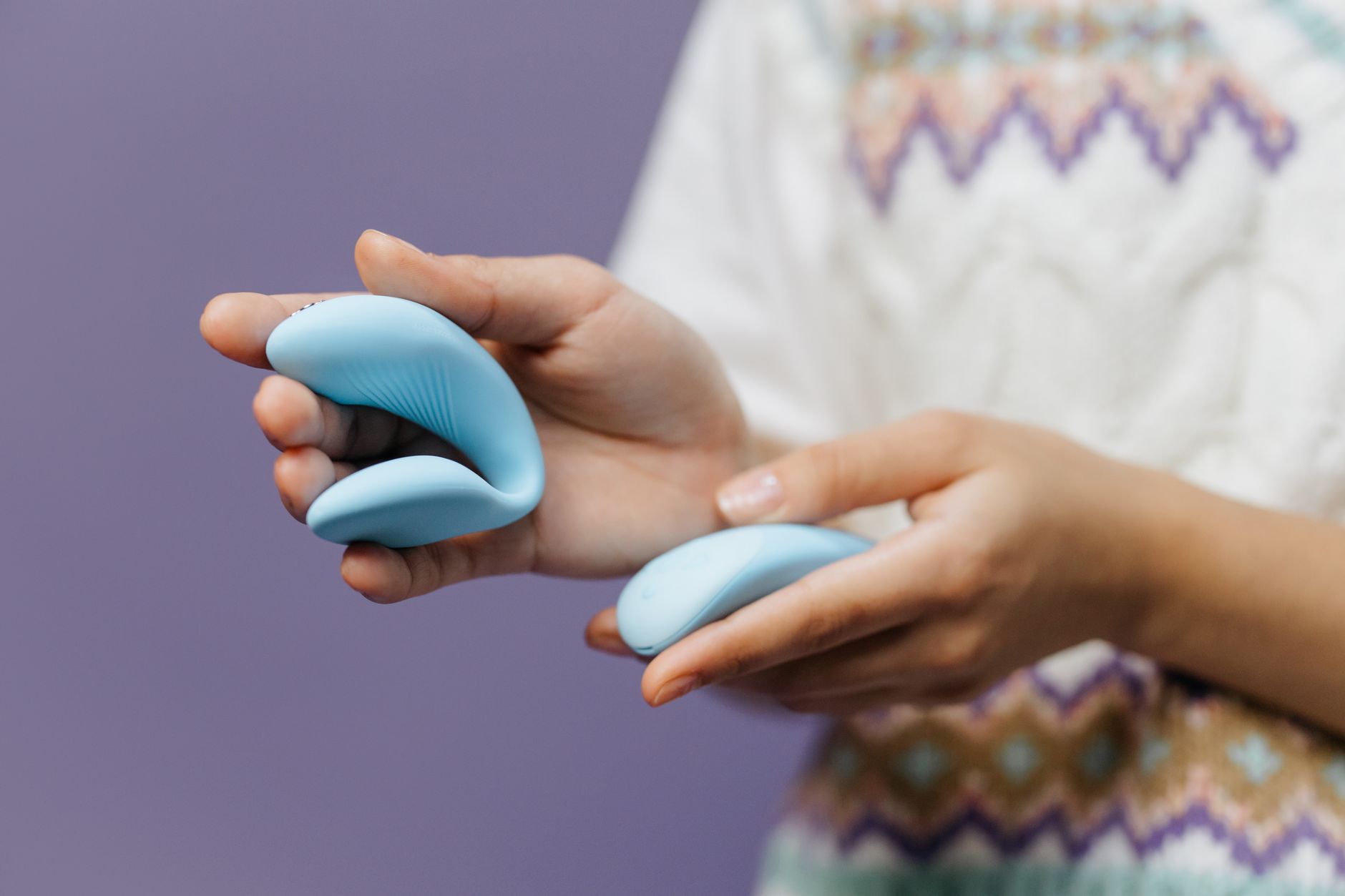
This is where lemon clitoral vibrators, like the suction-based technology in products like our clitoral vibrators, become genuinely useful.
Here's why: traditional vibration intensity alone doesn't always help when hormonal birth control has muted sensation. What helps is targeted stimulation that works with the altered physiology, not against it.
Lemon clitoral vibrators use gentle suction combined with subtle vibration patterns. That suction mechanism mimics the sensation of oral stimulation without requiring the same sustained pressure that might feel uncomfortable or overstimulating on less-responsive tissue. It's also notably different from buzz alone. Because you're building arousal through a combination of rhythm and gentle suction, the nervous system engages differently. The pathway to sensation isn't just "more vibration." It's "different kind of stimulation."
Many people on hormonal birth control report that they can access arousal and orgasm more reliably with suction-based toys than with traditional vibrators. That's not coincidence. It's physiology.
The practical adjustments that actually work
Let's get to what you're going to do differently.
Budget way more warm-up time. If you could go from zero to aroused in ten minutes before birth control, you might now need 20 to 35 minutes of foreplay or solo exploration. That's not a flaw in you. That's just the new timeline. Accept it. Build it into your rhythm with a partner or into solo sessions. A lemon vibrator helps here because you can use the lower patterns during that extended warm-up phase without overwhelming sensation.
Start at pattern one, always. Don't reach for the highest intensity hoping it'll speed things up. It won't. Your nervous system is more sensitive to overstimulation right now. Start low. Stay there longer than feels intuitive. Let arousal build gradually. The sensation will integrate better.
Lubrication is now non-negotiable. Birth control often reduces natural lubrication. Water-based lube is your constant companion now. This is not optional. Use it generously from the beginning of any sexual activity, whether solo or partnered.
Communicate the timeline shift to your partner. If you usually have sex with a partner, they need to know that the arousal timeline has changed. This is where people derail each other without meaning to. Your partner thinks they're doing what always worked. You're still in the warm-up phase. Nobody's having fun. Frame it clearly: "My arousal takes longer on this pill. That's not about you. It's about my body right now. Here's what helps." Then show them what helps. Maybe it's 25 minutes of foreplay before any lemon vibrator comes into play. Maybe it's that you use a clitoral vibrator as part of foreplay together.
When to consider switching
Not every birth control method creates the same arousal shift. The copper IUD (non-hormonal) doesn't affect desire or sensation at all. Some hormonal birth control formulations affect arousal less than others. The mini-pill has lower hormone dosage than combined pills. The implant and shot introduce higher doses than some pill options.
If you've been on your current method for three months and arousal still feels significantly impaired, talk to your prescriber about trying a different formulation. Some people find that switching from a pill to an IUD, or vice versa, recalibrates their experience dramatically.
Don't just assume you're stuck with this. You're not. But also don't assume a change will happen instantly. It takes about three cycles for your nervous system to recalibrate to a new hormonal baseline.
The mindset shift that matters most
Here's what I see happen repeatedly: someone starts birth control, notices their arousal has changed, and concludes that they've lost their capacity for pleasure. They become frustrated. Then they withdraw from sex. Then their partner feels rejected. Then resentment creeps in. All of that because we didn't name what was actually happening.
Your arousal hasn't disappeared. It's been modulated by hormones, which is exactly what was supposed to happen. The goal now is adaptation, not return to baseline. Your nervous system is learning to respond to a new hormonal environment. A lemon vibrator is a tool that helps that nervous system find pleasure under the new conditions.
You're not broken. You're recalibrating.
People also ask
Q: Can birth control permanently change my arousal?
A: No. The changes are reversible. Once you stop hormonal birth control, your body will begin to restore its natural hormone levels within a few cycles. Most people report that arousal and sensation gradually return to their baseline as the hormones clear your system.
Q: Why does my partner find lemon vibrators helpful when I'm on birth control?
A: Because the change in your arousal affects both of you. A lemon clitoral vibrator helps bridge the gap between what your partner is capable of offering (manual stimulation, oral sex) and what your body now needs to reach orgasm. It's not a replacement for them. It's a tool that lets you both access pleasure in a new way.
Q: Should I have told my doctor my arousal changed?
A: Absolutely. Decreased libido and sexual dysfunction are documented side effects of hormonal birth control. Your doctor needs to know so they can either reassure you about the timeline or help you explore alternatives. Don't assume it's just something you have to tolerate.
Q: Does every type of birth control kill arousal?
A: No. Copper IUDs don't affect hormones at all, so they don't suppress desire or sensation. Some hormonal methods affect arousal less noticeably than others. Pills with lower hormone doses are sometimes better tolerated than shots or implants. The only way to know is to try it and communicate what you actually experience.
Q: How long does it take for birth control to stop affecting arousal?
A: The first three months are when the most dramatic shifts happen. By month six, most people either have adapted to the new baseline or have switched to a different method. If you're still experiencing significant arousal dampening after six months, that's a conversation worth having with your prescriber.
Q: Can I use a lemon vibrator while on birth control?
A: Yes, absolutely. There's no interaction between hormonal birth control and any external toy. A lemon clitoral vibrator is actually a smart choice during this adjustment period because it provides targeted stimulation without requiring intense sensation to register.
The path forward
Birth control was designed to give you agency over your fertility. That's powerful. It's also okay if the side effects on your arousal feel like a trade-off worth reconsidering. You don't have to choose between reproductive autonomy and sexual pleasure. But you do have to choose how you respond to the change. Adaptation, exploration, and the right tools make that path much smoother. A lemon vibrator is one of those tools. Your own patience with your body is another.