
The Problem Nobody Names
You're with your partner. Things are building. And then you feel the subtle rush. Maybe they're moving faster. Maybe the energy shifts. Maybe you just sense that the time window is closing and you're nowhere close. So you speed up your own arousal to meet them, which means you don't actually get there at all.
That's the opposite of pleasure. And it's wildly common.
Here's what's actually happening: you and your partner are operating on different timelines, and instead of naming it, you're swallowing your own pace to keep the peace. Lemon vibrators aren't a band-aid for this dynamic. But they are a concrete tool for slowing everything down and building pleasure that isn't contingent on someone else's rhythm.
Why the Rush Happens (and It's Not About You)
Sex with a partner naturally accelerates. There's momentum, there's anticipation, there's someone else's arousal feeding into yours. All of that is real. But somewhere in there, one person is usually trying to match the other's pace instead of trusting their own.
For many people with clitorises, that means abandoning the slow, layered arousal that actually gets you off. You skip the building phase and jump to the finish line, then feel frustrated when your body won't cooperate.
Using a clitoral vibrator like a Lemon Wand device changes the equation. When you introduce a tool that you control, the timeline stops being negotiable. Your pleasure moves at your speed, not theirs.
Setting the Frame Before You Start
This is the part most people skip, and it's the most important part. Before clothes come off, name what you're noticing. Not as criticism. As fact.
"I notice I speed up to match you sometimes, and then I don't actually get there. I want to try something different tonight." That's it. No defensiveness, no theory. Just observation.
Then agree on what's actually going to happen. "I'm going to use my vibrator for as long as I need to. Not rushing. You can touch me, but the pace is mine." Clear expectations mean nobody feels abandoned or rejected when you're not moving on their timeline.
This conversation is the tool. The vibrator is just the permission structure.
Positioning That Keeps You Present
A lot of couples use clitoral vibrators while in penetrative positions, but that often recreates the same rush dynamic. You're worried about losing erection, timing, comfort. Back to the race.
Instead, try positions where you're facing each other but the vibrator's pace is completely independent. Sitting facing each other, your partner inside you if that's part of your dynamic, but your hand and vibrator setting the tempo. Or not in penetration at all. Just you with the vibrator, them with their hands on you elsewhere, both of you present with zero time pressure.
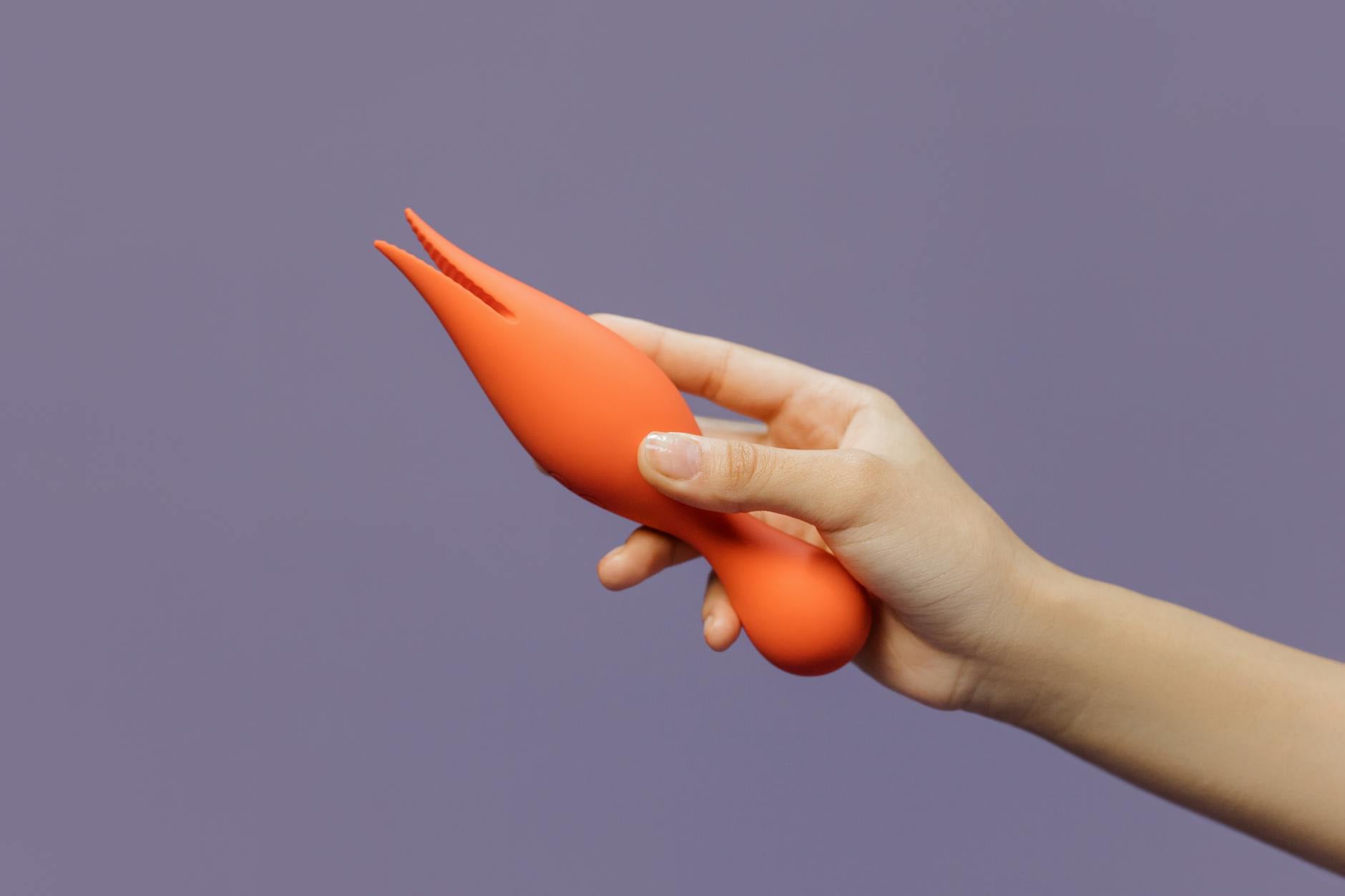
Photo by cottonbro studio on Pexels
The Technique That Actually Slows You Both Down
Here's the counter-intuitive part: start your vibrator before you think you need it. At pattern 1 or 2. Early. When you're maybe 20 percent aroused, not 80 percent.
The reason: if you wait until arousal builds to a certain point, you'll be tempted to match that energy with more intensity. But if the vibrator is already working, you can just let sensation accumulate without chasing it. Your partner sees you not panicking about time. That makes them relax too.
Stay there. Two patterns, low intensity. For much longer than feels natural. Five, ten, fifteen minutes. Your brain will protest. Let it. This is the part where pleasure actually starts feeling good instead of like a task.
When you finally turn up intensity, you're not trying to catch up to an arbitrary finish line. You're building on actual sensation. That's a completely different experience.
What Your Partner Can Do (Without Making It About Them)
This is where a lot of couples get stuck. Your partner wants to help, to be part of it. And they can be. Just not by steering the ship.
Their job is stillness and attention. Their hand on your thigh, your chest, your face. Not moving you toward their timeline. Not adding speed. Witness. Presence. Occasional words. "You're taking your time. I love that." "Stay with this. No rush." "You deserve this."
If penetration is involved, slower is radically different from what most people practice. Barely moving. Letting your vibrator do the work while they stay still. It sounds boring. It's the opposite.
If it's not involved, they can be touching you everywhere except where the vibrator is, so you're getting diffuse sensation plus focused sensation. That combination, when there's no rush, builds stronger orgasms than speed ever does.
Dealing With the Guilt That Comes Up
Most people with longer arousal timelines eventually start feeling bad about taking time. "This is taking too long." "I'm being selfish." "They must be uncomfortable." Nope. Not if you've set the frame right.
Your partner agreed to this. They're getting something from stillness and attention too. Most people don't slow down enough to actually feel their partner's body. This is a gift for both of you, not a burden you're placing on them.
If guilt comes up anyway, name it. "I'm feeling a bit self-conscious." And your partner can say, "Don't. This is for you. I want you to have this." Then you both let it go.
Guilt is just a story your nervous system tells when you're asking for something unfamiliar. It will pass.
The Orgasm Conversation
Here's the thing almost nobody talks about: when you're no longer racing, orgasms feel different. Sometimes quieter. Sometimes more full-body. Sometimes it takes longer to crest, and the whole experience is less like a sprint and more like a wave.
Your partner might be used to a certain sign that you're finished. Sounds, intensity, speed. None of those might show up in this new pace. So tell them. "When I get there, it might not look like before. You might not know immediately. I'll tell you." That way they're not secretly worried they missed the moment.
Some people don't orgasm at all in this slower mode, at least not the first few times. That's not failure. That's your nervous system learning to feel sensation without desperation. Pleasure is still happening. It just doesn't have to conclude with an orgasm to count.
How Often This Actually Solves the Problem
One evening of this doesn't fix a pattern. But three or four times, something shifts. Your partner starts internalizing that your pleasure moves at your pace. You start trusting that they're actually okay with waiting. The panic softens.
After a few months of regular practice, you might notice you don't need the vibrator running for as long. Your arousal naturally starts building slower because you're not in a race anymore. The vibrator becomes a tool you use when you want deep sensation, not a crutch for managing pace anxiety.
Some couples find that introducing this dynamic changes the whole relationship. Because if you can slow down enough to listen to what your body actually wants during sex, you start doing that in conversations too. Fewer interruptions. More actual listening. It's weird how connected those things are.
Why Lemon Vibrators Specifically Help Here
Clitoral vibrators give you direct control over intensity and pattern in a way nothing else does. Your partner's hands, your partner's body, they're responsive to the overall dynamic. A vibrator lets you separate sensation from speed.
With a Lemon Wand vibrator, the patterns aren't overwhelming. You can stay at a gentle intensity for a long time. That's not true for all toys. Some devices feel like they're pushing you toward climax by design. Lemon vibrators let you hover. To feel. To build without being dragged.
That's the whole difference.
Frequently Asked Questions
What if my partner gets frustrated by the slow pace?
That frustration is usually not about you. It might be habit, it might be their own anxiety about performance or timing. A good conversation before you start matters here. "This is what I need tonight. Your job is to be present, not to manage my arousal." If they can't do that, that's information about the relationship, not about your pleasure being wrong.
Can I use lemon clitoral vibrators if we're in a penetrative position?
Yes, but the dynamic changes. Penetration naturally accelerates arousal for the penetrating partner. If that's true for your partner, their timeline gets shorter. So either embrace that (you might orgasm faster too) or save the vibrator for times when penetration isn't involved. Most couples find the second works better for practicing this slow approach.
Does this mean we can never have quickies again?
Not at all. This is one tool for one dynamic. Some nights you're both in a rush and that's fine. But knowing you can slow down when you want to changes how you approach the nights when you do want speed. You're choosing it, not defaulting to it.
What if I can't orgasm even with the slow approach?
Then at least you've separated pleasure from performance. That's actually huge. Some people find that after practicing slow sensation for a while, they stop needing an orgasm to call the experience successful. The sensation itself becomes the point. And then, weirdly, orgasms sometimes show up anyway.
How do I bring this up without making my partner feel bad?
Frame it as something you want to try together, not as a complaint about how things are now. "I've been reading about different ways to slow down, and I think I'd like to experiment. Want to try it with me?" Most partners, when offered the frame of "let's explore" instead of "you're doing this wrong," say yes.
Is it okay if my partner also uses a vibrator at the same time?
Completely okay. The point isn't that you're the only one using a toy. The point is that you're both on your own timeline, supporting each other's pleasure instead of managing the other's pace. That looks different for every couple.
One More Thing
Slowing down is uncomfortable at first. Your brain will try to speed back up. Your nervous system will want familiar rhythm. But after a few weeks of practice, something settles. You realize that being rushed was the problem, not the solution. And then you get to actually feel what your body wants when it's not panicking about time.
That's when pleasure starts being something you're building together, not something you're performing for each other. That's when vibrators become useful. When you're both present enough to actually feel them.
Start there.