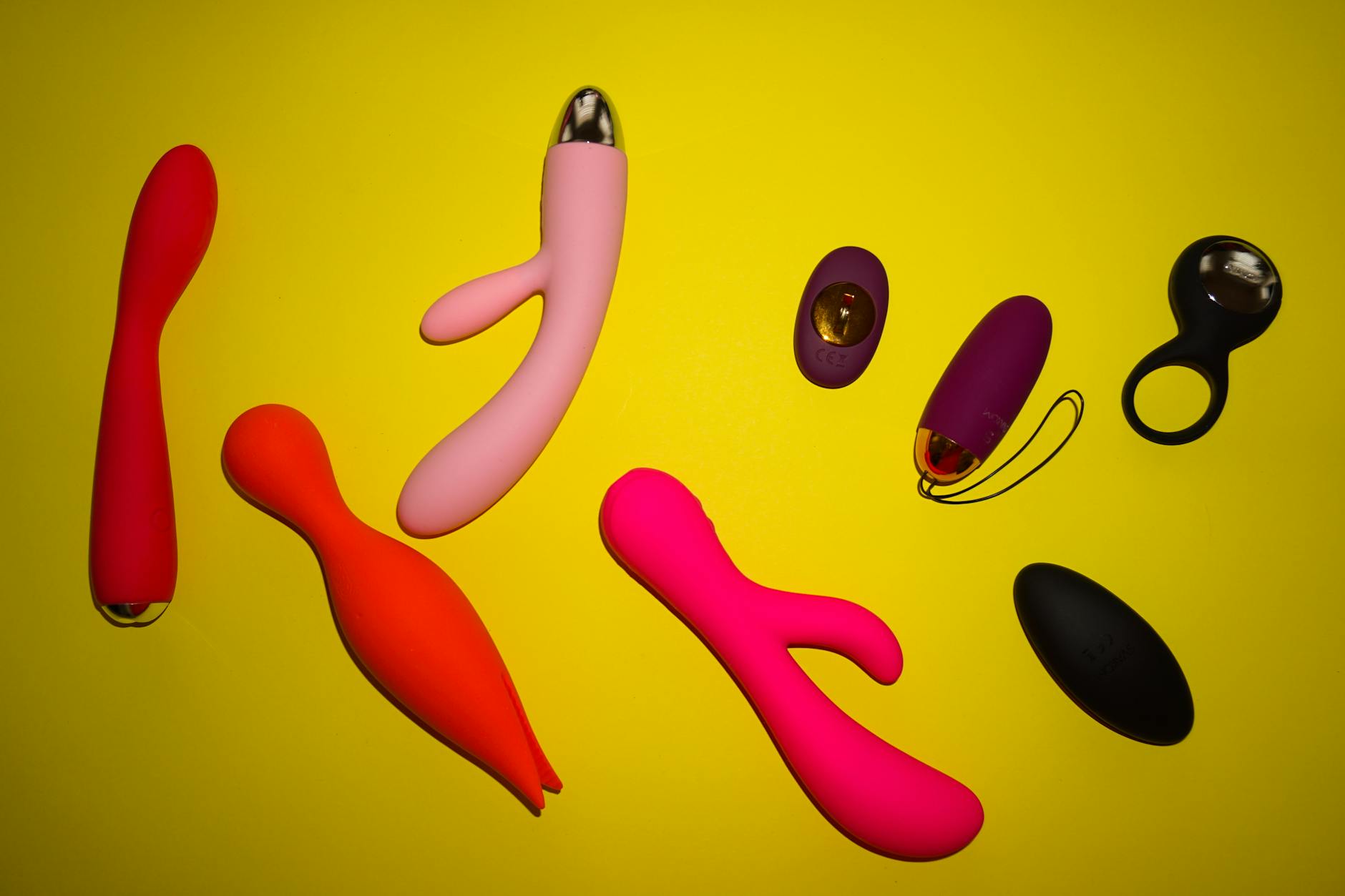
Let's name the thing nobody talks about
You've thought about it. Maybe you've even bought something. And now it's sitting in a drawer, untouched, because the moment you get alone, your nervous system hijacks the whole plan. Your brain fills with shoulds and what-ifs. You feel weird. You feel selfish. You feel watched even though you're literally alone. This is not failure. This is normal biology colliding with decades of conditioning.
The good news: that feeling has nothing to do with whether you'll actually enjoy a lemon clitoral vibrator. It's just a threshold you need to walk through first.
Why your brain is staging a coup
There are three things happening at once when you sit down to explore solo pleasure, and understanding them separates real barriers from false alarms.
First, there's novelty shock. Your body has its habits. Maybe you've only ever experienced pleasure in one specific way, with one specific person, or never really at all. Introducing something new—a tool, a rhythm, the permission to focus entirely on yourself—triggers a "this is weird" response. That's not anxiety. That's your nervous system noticing something unfamiliar and flagging it as "different." It softens after three or four times.
Second, there's permission guilt. Many of us grew up absorbing the message that solo pleasure is shameful, selfish, or somehow a failure of partnership. That belief doesn't usually show up as conscious shame anymore. It shows up as a vague sense of "I shouldn't be enjoying this" or "I should be doing something more productive." It's a ghost rule from people who aren't even in the room.
Third, there's performance anxiety. Even alone, you might catch yourself watching yourself, narrating, asking "Am I doing this right? Should I feel more by now?" That self-monitoring locks you out of actual sensation. Your brain is in the audience instead of onstage.
Here's the part I want you to hear: none of these are about the vibrator. They're about permission, novelty, and how your nervous system learns safety. All three can shift in a single session.
The first-time setup that actually works
Don't start with ambition. Start with curiosity.
Pick a time when you're genuinely alone and won't be interrupted for at least 20 minutes. Not because you need 20 minutes to finish—you don't know how long you'll want yet. But because interruption anxiety makes everything harder. Your body needs to know it's safe to let go.
Physical comfort matters more than most people admit. Use the bathroom first. Get water. If your room is cold, get a blanket. If you're in a position that makes you feel tense or watched, move. You might sit, lie down, or recline—whatever feels least like you're performing and most like you're actually there.
Start clothed. Just hold the lemon vibrator and turn it on. Listen to it. Feel the weight. Let your nervous system get bored with it being "new." Thirty seconds is enough. You're signaling to your body: "This is a normal object. Nothing scary."
Then—and this matters—step away. Go do something else for five minutes. Drink water. Read a paragraph. Your body needs to know that touching the vibrator doesn't obligate you to anything. This removes the pressure instantly.
The actual progression (no rushing)
If you want to continue, come back. This time, you might hold it against the outside of your underwear or over your clothes. No penetration. No performance. Just sensation. Some people spend three entire sessions here and find it's enough. That's not "not working." That's you learning what your body likes.
When you're ready—and readiness is a feeling, not a schedule—you might move your clothes aside and make direct contact. Again, no pressure to go further. Lemon clitoral vibrators work by suction and air-pulse, which means the sensation is completely different from friction. It might feel strange at first. That's normal. Suction-based vibrators tend to build sensation differently than traditional vibrators, and your body is learning a new language.
If you're comfortable moving forward, you might stay in one place—the most sensitive area of your clitoris—and let the sensation build. Some people use a pattern that increases over time. Others find the right setting and stay there. There's no "right way." There's only what feels right to your body today.
Orgasm is not the goal of session one. Pleasure is. And pleasure is whatever sensation feels good when you're not watching yourself have it.
What to do with the self-consciousness
If you catch yourself narrating or self-monitoring, that's not a sign to stop. It's a sign to redirect. You might:
Focus on sensation rather than result. Instead of "Is this working?" ask "What does this feel like right now?" Instead of tracking toward a finish line, notice texture, warmth, rhythm, intensity.
Give yourself something else to do with your hands. Hold a pillow. Press against the mattress. Stroke your own skin. Moving your hands gives your brain something to concentrate on other than "Am I doing this right?"
Breathe deliberately. Not deep breathing for relaxation—just notice your breath. In and out. That's your anchor back to the present moment.
Most importantly, remind yourself that this is practice for pleasure, not a performance test. You're learning what you like. That takes time. Some of the best solo sessions happen when you're not even chasing anything—just exploring.
When to use a partner-brand lubricant
Lemon sexual toys, like all clitoral vibrators, can sometimes feel more intense than expected, especially if your tissue is sensitive or if you're new to vibration. A small amount of water-based lubricant can soften the sensation and make it feel richer. You don't need much—a dime-sized amount is a starting point. This isn't a sign something is wrong. It's just a tool that makes the experience more comfortable.
If you're using a lemon sucker-style vibrator, lubrication is entirely optional and personal preference.
The emotional aftermath (and why it matters)
After solo exploration, you might feel:
Relaxed and sleepy. This is your parasympathetic nervous system winding down. You're done. Go to sleep.
Energized and a little vulnerable. This is normal. Your body just released tension it was holding. You might feel emotional. That's not weakness. That's your nervous system recalibrating. Drink water. Be gentle with yourself.
Weird or empty. Some people expect some kind of emotional fireworks or instant life change. Solo pleasure is often more subtle. It teaches your body that it can feel good without needing anything external. That's profound, even if it doesn't feel movie-like.
Shy about what you just did. That shame hangover is the ghost rules again. Notice it. Don't argue with it. And remind yourself: you just took care of yourself. That's not selfish. That's actually the opposite.
Making it a actual practice, not a one-off
The difference between "tried a vibrator once" and "owns my pleasure" is often just repetition. Your nervous system needs to learn that this is safe, normal, and allowed. That usually takes four to six sessions before it stops feeling like performance.
You don't need to schedule it. You don't need to make it fancy. You might find that your solo practice becomes something you actually look forward to—not because it's a race to orgasm, but because it's 20 minutes where you're completely in charge of how you feel.
That's the shift that matters. And lemon clitoral vibrators are specifically designed to make that experience easier. They're quiet. They're intuitive. They don't require a learning curve. They just work.
People also ask
Is using a vibrator alone more intense than with a partner?
Not necessarily. Intensity is personal. What matters is that you're in control of everything—the rhythm, the pressure, the timing, how long you continue. Some people find solo exploration less intense because there's no performance pressure. Others find it more intense because they can focus entirely on their own sensation without worrying about anyone else. The lemon vibrator will feel however your body experiences it. That's not a flaw.
How long should my first solo session with a vibrator be?
As long as feels good. It could be five minutes. It could be 30. There's no minimum. In fact, shorter, more frequent sessions—even just 10 minutes—often feel less intimidating and let your body learn faster than one big session. Consistency matters more than duration.
What if I don't orgasm the first time I use a vibrator?
Orgasm is not the goal. Pleasure is. And pleasure shows up in a thousand ways that aren't orgasm—relaxation, sensation, just feeling something in your own body, permission. If you're focused on whether you're going to orgasm, you're already out of the room. Try a different session where orgasm is explicitly not the goal and see if the pressure lifts. Often it does.
Can using a lemon vibrator alone affect how I experience pleasure with a partner?
Yes, but probably not how you're worried about. Getting to know your own body better—what feels good, what doesn't, what you like—makes partnered sex better, not worse. You become less dependent on your partner to figure out your pleasure and more able to direct your own. That makes sex with a partner more collaborative and less performance-based. It's a feature, not a bug.
Is it normal to feel emotional or vulnerable after solo exploration?
Completely normal. Your nervous system is releasing tension, your body is in a vulnerable state, and you might be confronting a lot of old conditioning in one session. Some people feel tearful. Others feel a little raw. This passes. Hydrate, be gentle with yourself, and know that emotional release is actually a sign your nervous system is unwinding. That's healthy.
How do I know if I'm using the lemon vibrator correctly?
If it feels good and you're not in pain, you're using it correctly. There's no wrong way. Some people use it on the entire vulva. Others focus on one spot. Some hold it still and let the vibration do the work. Others move it slowly. Your body will tell you what works. The only feedback that matters is your own sensation, not some imagined "correct" technique.
What comes next
Solo exploration with a lemon clitoral vibrator is not a stepping stone to something better. It's not practice for partnered sex. It's its own complete experience. What it is is permission. Permission to feel good. Permission to take time for yourself. Permission to learn your own body without shame.
That permission—once you give it to yourself—changes everything. Not just about pleasure, but about how you move through the world. You stop asking "Is this selfish?" and start asking "Do I want this?" And that shift is worth far more than any single orgasm.
If you're still nervous, that's okay. The nervousness usually lifts after the first time you actually follow through. Your body knows what to do. Your nervous system just needs evidence that it's safe. Give yourself that.
Need support navigating pleasure in your life or relationship? Let's talk.