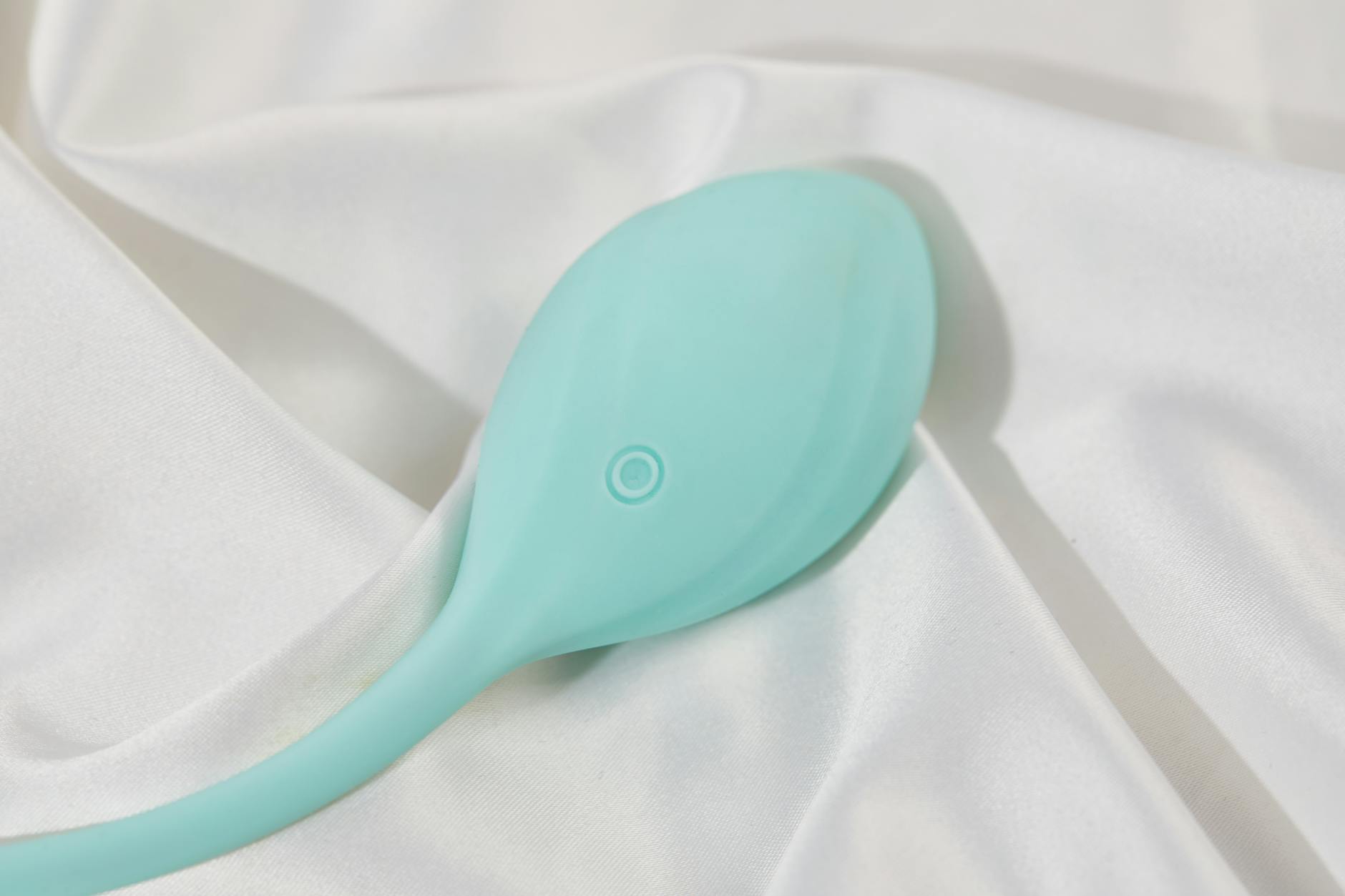
How to Use Lemon Vibrators When You Feel Disconnected From Your Body
When intimacy feels distant or numb, lemon clitoral vibrators can be a gentle path back to sensation. Here's how to rebuild that connection at your own pace.
Disconnection from your body during intimacy is more common than you'd think. It shows up differently for everyone: as numbness, as watching yourself from outside, as going through the motions without feeling present. For some, it's trauma. For others, it's stress, grief, depression, or years of ignoring your own signals. The cause matters for healing, but the experience is the same. You're there, but you're not.
The good news is that reconnection is possible, and it doesn't require therapy alone. A tool like a lemon vibrator can actually be part of the path back.
Your nervous system learned disconnection as protection. When something happened that was overwhelming, threatening, or confusing, your brain did what it's designed to do. It checked you out. That response kept you safe then. But now it's running on autopilot, even when you're with someone you trust and want to be present with.
Dissociation during sex is your body's way of managing something it perceives as unsafe. That could be the sensation itself, the vulnerability, the intimacy, or something deeper tied to past experience. Fixing it requires both nervous system regulation and gradual sensory retraining.
Here's where clitoral vibrators like Hello Nancy's lemon vibrator come in. They offer something drugs and talk alone don't: direct, predictable stimulation that you control completely.
Before you use any toy, you need to map what you can actually feel. This sounds clinical, but it's the opposite. You're building a sensory geography of your body.
Set aside 20 minutes alone. No pressure to orgasm or feel anything special. Touch different parts of your body slowly. Your forearm. Your inner wrist. Your collarbone. Your inner thigh. Notice what creates sensation and what feels muted. Don't judge it. You're just gathering information.
Write it down if that helps. "Wrists feel alive. Inner thighs feel numb. Breasts feel distant but responsive to pressure." This map becomes your starting point. It tells you where sensation already exists, which is where you begin.
Lemon clitoral vibrators operate through air-pulse suction technology rather than traditional vibration. That matters for reconnection work because suction creates a different kind of sensation—rhythmic, consistent, and less jarring than buzz. It's also something you can't quite replicate with your hand or fingers, which makes it feel genuinely new to your nervous system.
When you're rebuilding connection after dissociation, novelty is useful. Your brain has learned to tune out familiar stimuli. Something different—even if it's just a different kind of touch—can grab your attention back into your body.
Lem vibrators also give you absolute control. You choose the rhythm. You choose the intensity. You can stop instantly. That control is crucial when you're healing disconnection because it tells your nervous system: you're safe here, you're in charge, nothing will happen without your consent.
Start with the toy in your hand, not inside anything. Hold it. Feel its weight. Notice the silicone against your fingers. This is embodiment practice, not foreplay.
Turn it on the lowest setting. Place it somewhere on your body where you already feel sensation. Your forearm. The back of your neck. Your collarbone. Let it stay there for 10 seconds. Notice what you feel. Then move it slowly to a numb area—your inner thigh, your lower abdomen, your breast.
The goal isn't pleasure. It's sensation. You're teaching your nervous system that this input is safe, controllable, and yours.
Do this for 10 minutes, maximum. Stop before you feel tired or restless. Consistency matters more than duration. Five days a week of 10-minute sessions rebuilds connection faster than one intense session.
Once you've mapped sensation with the lemon vibrator for two weeks, you can direct it toward your clitoris. Start with that lowest setting. Most people with dissociation find that high intensity actually increases disconnection—it's too much stimulation for a nervous system that's already overwhelmed.
When you're reconnecting, slow beats fast every time. I know that goes against everything marketing tells you about toys, but it's true for healing.
Your clitoral tissue has thousands of nerve endings, but those nerves are also wired to your brain and your parasympathetic nervous system. When you're dissociated, your nervous system is stuck in sympathetic activation (fight or flight) or collapse (freeze). To bring yourself back into presence, you need to downregulate.
That means: longer warm-up time than you'd think you need. Patience with low intensity. Permission to stop if you feel yourself spacing out. If you catch yourself leaving your body, pause the toy, take three deep breaths, and ground yourself by naming five things you can see.
Partner-assisted reconnection is powerful, but only when you've already built some solo capacity. Trying to heal disconnection during partnered sex before you've reconnected with yourself alone is like asking your nervous system to hold two things at once when it's already struggling.
Once you're comfortable using your lemon vibrator alone and noticing you're present during that time, you can invite a partner in. They can hold the toy while you focus on sensation and communication. They can learn your map of where you feel things. Most importantly, they can provide the safety witness—someone present with you while you're retraining your nervous system to stay.
Many people rebuilding connection after dissociation carry shame about the disconnection itself. You might think you "should" be present, or that using a toy is somehow inauthentic, or that your partner deserves someone who can show up without tools.
Here's the truth. Using a lemon vibrator is not a shortcut or a crutch. It's a therapeutic intervention. It's you taking responsibility for your own nervous system healing. That's the opposite of dissociation. That's presence.
Your partner doesn't deserve someone who performs presence. They deserve you, rebuilt.
If you're using a clitoral vibrator consistently and noticing no change in your ability to feel present after four weeks, or if the disconnection is tied to specific trauma, you probably need a trauma-informed therapist in addition to embodiment work.
A somatic therapist or someone trained in trauma therapy can help you understand why your nervous system learned to disconnect and give you tools to safely process that. Toys can help, but they're not a replacement for professional support if there's deeper wounding involved.
Reconnection isn't sudden. It builds in small moments. One day you notice you felt present for two minutes during solo play. The next week you manage five. Then a whole session. Then it starts to carry over into partnered intimacy.
Your body didn't disconnect to hurt you. It learned that as a survival response. Teaching it that presence is safe now—that sensation is trustworthy, that your pleasure matters, that you can stay in your body—happens through repetition, patience, and tools that give you control.
A lemon clitoral vibrator from Hello Nancy is one of those tools. Used intentionally, it becomes a bridge between your disconnected nervous system and the embodied, present life you deserve to live.
Turning on takes time and the right conditions. Dissociation is when you're physically present but mentally absent. During arousal buildup, you're present but calm. During dissociation, you're watching yourself from outside, or you feel nothing despite stimulation, or you go on autopilot. The key difference: with low arousal, presence is there. With dissociation, you've left your body.
Yes, but carefully and ideally with support. Trauma can make external stimulation feel threatening at first. Starting slow, maintaining complete control, and having a therapist you check in with makes the difference. Some survivors find that the predictability and control a lemon vibrator offers actually helps regulation. Others need to build more internal safety first. There's no one right answer.
It depends on how long you've been disconnected and what caused it. Some people notice shifts in two weeks. Others take eight to twelve weeks. Consistency beats intensity. Five 10-minute sessions a week rebuilds connection faster than one 45-minute session. Your nervous system learns through repetition that this input is safe.
That's real and valid. Dissociation often involves trust issues. You might feel vulnerable with a partner involved. Start solo until you feel confident. Then try a session where your partner is present but not touching you or the toy, just sitting nearby. Build incrementally. Your comfort matters more than their excitement about using it together.
Numbing can make natural lubrication less present. Yes, use a water-based lubricant even if you don't think you need it. It reduces friction, makes the experience more comfortable, and removes one variable your body has to manage. This lets you focus purely on sensation and presence.
No. Your body learned to protect you. Using a tool to help teach it that presence is safe now is wisdom, not weakness. Athletes use equipment. Musicians use instruments. Your nervous system uses a lemon vibrator to rebuild trust in sensation. That's exactly what tools are for.
van der Kolk, B. (2014). The Body Keeps the Score: Brain, Mind, and Body in the Healing of Trauma. Penguin Press.
Porges, S. W. (2011). The Polyvagal Theory: Neurophysiological Foundations of Emotions, Attachment, Communication, and Self-Regulation. W. W. Norton & Company.
Ogden, P., Minton, K., & Pain, C. (2006). Trauma and the Body: A Sensorimotor Approach to Psychotherapy. W. W. Norton & Company.
Komisaruk, B. R., & Whipple, B. (2005). Functional MRI of the brain during orgasm in women with complete spinal cord injury. Progress in Brain Research, 152, 127-140.