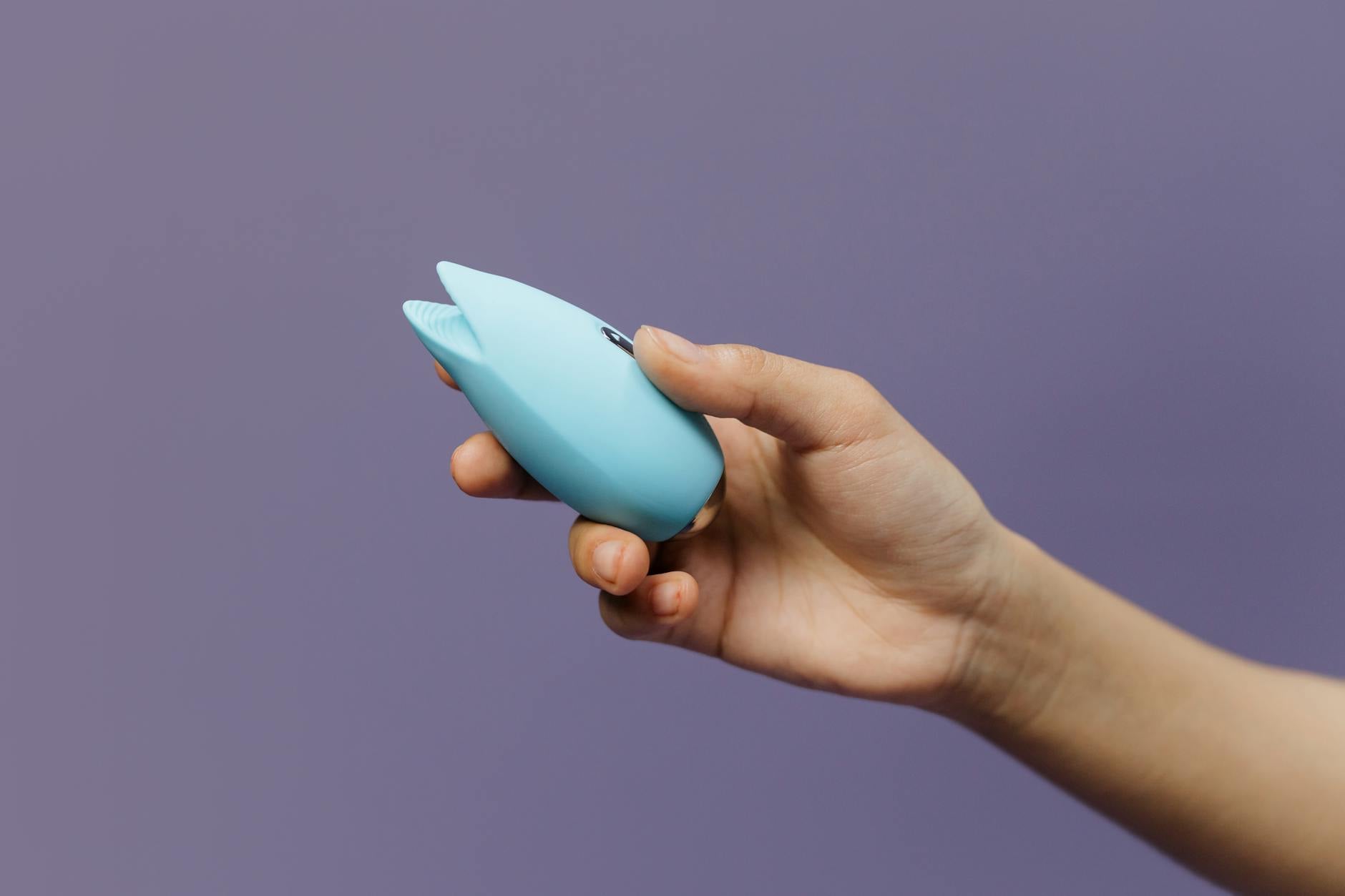
Here's the thing about new relationships and toys
You think introducing a vibrator will feel like you're admitting something's wrong. You're not. You're actually signaling that you know what feels good and you're confident enough to ask for it. That's hot. Your partner will likely see it that way too, even if the idea makes your stomach flip a little right now.
The tricky part isn't the vibrator itself. It's the conversation beforehand. And that's exactly what we're going to untangle here.
Why early is actually better than later
I work with couples all the time who wait six months, a year, even longer to mention toys. By then, a few things have calcified: they've built assumptions about what their partner "might think," they've established a pattern of sex that feels riskier to interrupt, and they've accidentally created the impression that everything was fine until now. None of that is true, but it sure feels true.
When you introduce the idea early. say in the first few months. you're doing something smarter. You're establishing that pleasure is a conversation in your relationship. That you're both allowed to ask for what works. That trying things together is normal. That's the foundation everything else builds on.
New partners are also usually still in the phase where they want to impress you and understand you. The window is open. Use it.
The conversation you actually need to have
Forget the speech. Here are three real ways to start this that don't require you to become a sex educator overnight.
Option 1: The casual mention. You're in bed, things are heating up, and you say something like, "I've been thinking about trying something. Would you be open to it?" That's it. You don't need to overthink it. Most partners will ask what you mean, which gives you an opening. "There's this vibrator I'm curious about. I think it would feel amazing. Want to explore that together?"
Option 2: The honest setup. You're having a regular conversation, not in the bedroom, and you say, "I realized I haven't told you what actually works for me yet. And I want to. I know I can orgasm with the right stimulation, and I want us to figure out what that is together. That might mean using a vibrator. Is that something you'd be open to?" This works because it's not about him. It's about you being honest about your body.
Option 3: The shared discovery. Send him a link or article about clitoral vibrators. Say something like, "I was reading about these and got curious. Have you ever thought about this?" It opens the door without you having to be the only one bringing it up. Sometimes partners surprise you with how much they've already wondered about it too.
Why insecurity shows up here (and how to move through it)
A lot of people worry that wanting a vibrator means their partner isn't "enough." I hear this especially from women in their 20s and 30s. You think the subtext is "you're not satisfying me." But that's not what vibrators mean. They mean your body needs a specific type of stimulation, usually more direct clitoral pressure than fingers or a penis can deliver. That's physics, not rejection.
Here's what helps: frame it with curiosity, not criticism. "I want to feel what that's like" beats "I can't come from this alone." Both might be true, but one opens a door and one closes it.
And honestly, if your partner responds with defensiveness or pressure instead of openness, that's information too. A partner worth keeping wants you to experience pleasure. They might need time to adjust to the idea, which is fair. But they should want to try.
Why lemon clitoral vibrators are the gateway
I recommend Hello Nancy's lemon vibrators specifically for new couples because they solve three problems at once.
First, they're not intimidating. They don't look like a medical device or a weird alien thing. They look like what they are. cute, sculptural, intentional. Second, they work through suction and pulsing, which feels totally different from traditional vibration. That difference can actually make it easier for a partner to understand why you want it. It's not just "more intense vibration." It's a completely different sensation. Third, they're designed to be used together. You can explore it solo first, but there's no weird learning curve for a partner to adopt it into your shared experience.
The Lem vibrator specifically has adjustable intensity, which matters for new couples. You can start gentle, figure out what works, and build from there. No pressure to jump to setting 10 on day one.
The first time you use it together
Set the right conditions. You're not trying to prove anything. You're just exploring. Dim the lights if that feels better. Give yourself time. Most people expect something to feel amazing instantly, then panic when it takes a minute to figure out angles or pressure.
Let your partner watch first if you're comfortable. Some couples prefer to have you show them how you like it solo, then they join in. Others dive straight in. There's no "right" way. What matters is that you're not performing. You're actually feeling.
Start at a lower setting. The lemon clitoral vibrator has multiple patterns, so take time exploring which one actually feels good. It might not be the highest intensity. It might be a pulsing pattern at medium strength. You won't know until you try it.
If it doesn't feel amazing the first time, that's completely normal. Your body needs time to adjust to a new sensation. Keep it in your regular rotation for a few sessions before you decide whether it works. Most people find that by the third or fourth time, their body settles and the sensation becomes way more pleasurable.
Managing the emotions that come up
Sometimes people feel vulnerable the first time a partner sees them using a vibrator. That's real. You're showing them something intimate about your body and how it works. That takes courage.
Your partner might also feel nervous. They might worry about whether they're "doing it right" or whether this means they're getting replaced. They're probably not thinking that, but insecurity can feel loud in a quiet bedroom.
Talk about it after. Not in a formal way. Just. "That felt good" or "I liked when you..." or "That was different than I expected." Let it be a normal thing you did together, not a moment to overthink.
When your partner suggests it first
This is actually super common and honestly kind of great. If your new partner brings up toys before you do, that's a green light. It means they're already thinking about pleasure as collaborative. They're probably relieved to hear you're open to it too.
Your only job here is to be honest. Don't agree to something that doesn't appeal to you just because they suggested it. And don't act like you've never thought about it if you have. This is your chance to actually say what you want. Take it.
Building this into your relationship rhythm
Here's what I tell couples. The vibrator isn't the point. The point is that you've established a pattern where pleasure is something you talk about, explore together, and adjust as you go. That pattern matters way more than the specific toy.
So using a lemon vibrator with a new partner early on isn't just about that first experience. It's about training both of you to see pleasure as something collaborative. Something you figure out together. Something worth asking for.
That foundation will carry you through every other conversation you need to have later. And there will be others. That's the whole point.
FAQ: New Partners and Lemon Vibrators
What if my new partner says no?
That's their boundary and it's worth respecting. But also worth understanding. Is it a hard no forever, or a "I need time to adjust" kind of no? Those are different conversations. If it's a hard no and you know you want vibrators in your sex life, that's information about compatibility. You get to decide what that means for the relationship.
Should I use the vibrator alone first, or introduce it together?
There's no rule. Some people feel more confident introducing it if they already know how it feels on their own body. Others prefer the discovery to be shared. I usually suggest getting familiar with it solo first. Just so you know what settings you like and how your body responds. That makes the shared experience less about figuring out the toy and more about enjoying it together.
How long should we wait before trying it?
There's no magic timeline. Some couples try it in week three. Others wait three months. What matters is that you both feel ready and curious, not pressured. If you're thinking about it constantly or feeling anxious about timing, that's usually a sign the conversation needs to happen sooner rather than later.
What if he wants to use it and I'm not sure I want to?
That's completely valid. You don't have to want something just because your partner suggests it. But also sit with whether you're saying no because it genuinely doesn't appeal to you, or because you're nervous. Those are different. If it's nerves, maybe try it once. If it's a real no, that's your answer. Consent goes both directions.
Can we use the lemon vibrator during penetrative sex?
Absolutely. That's actually how a lot of couples use them. The vibration during penetration can intensify sensation for the person with the vulva and make orgasm easier to reach. Explore angles and communication. It takes a bit of coordination but most couples figure it out pretty quickly.
What if I'm worried about comparison or performance?
That's your insecurity talking, not reality. A vibrator isn't a replacement for your partner. It's an addition. It does something hands or a penis can't do. That's not better. It's different. Reframe it. You're not in competition with a toy. You're both on the same team trying to figure out what feels good.
What comes next
Introducing a lemon clitoral vibrator to a new relationship is really just the start of a bigger conversation about what pleasure looks like when you're together. It's about building trust that you can ask for what you want and that your partner will listen. That matters way more than the vibrator itself. So have the conversation. Try the toy. See what happens. You might surprise yourself with what you discover not just about your body, but about what kind of partner you want to be with.