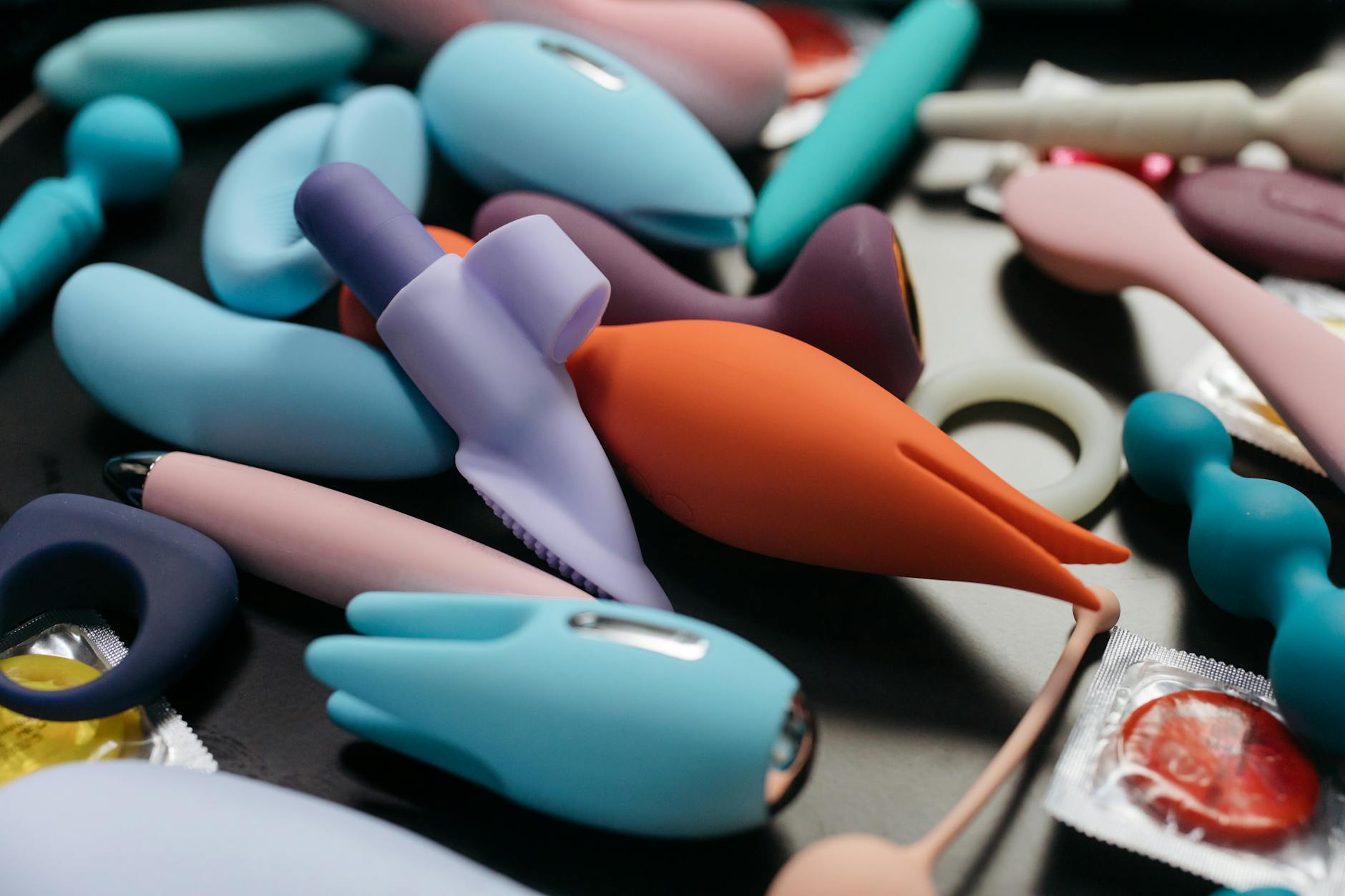
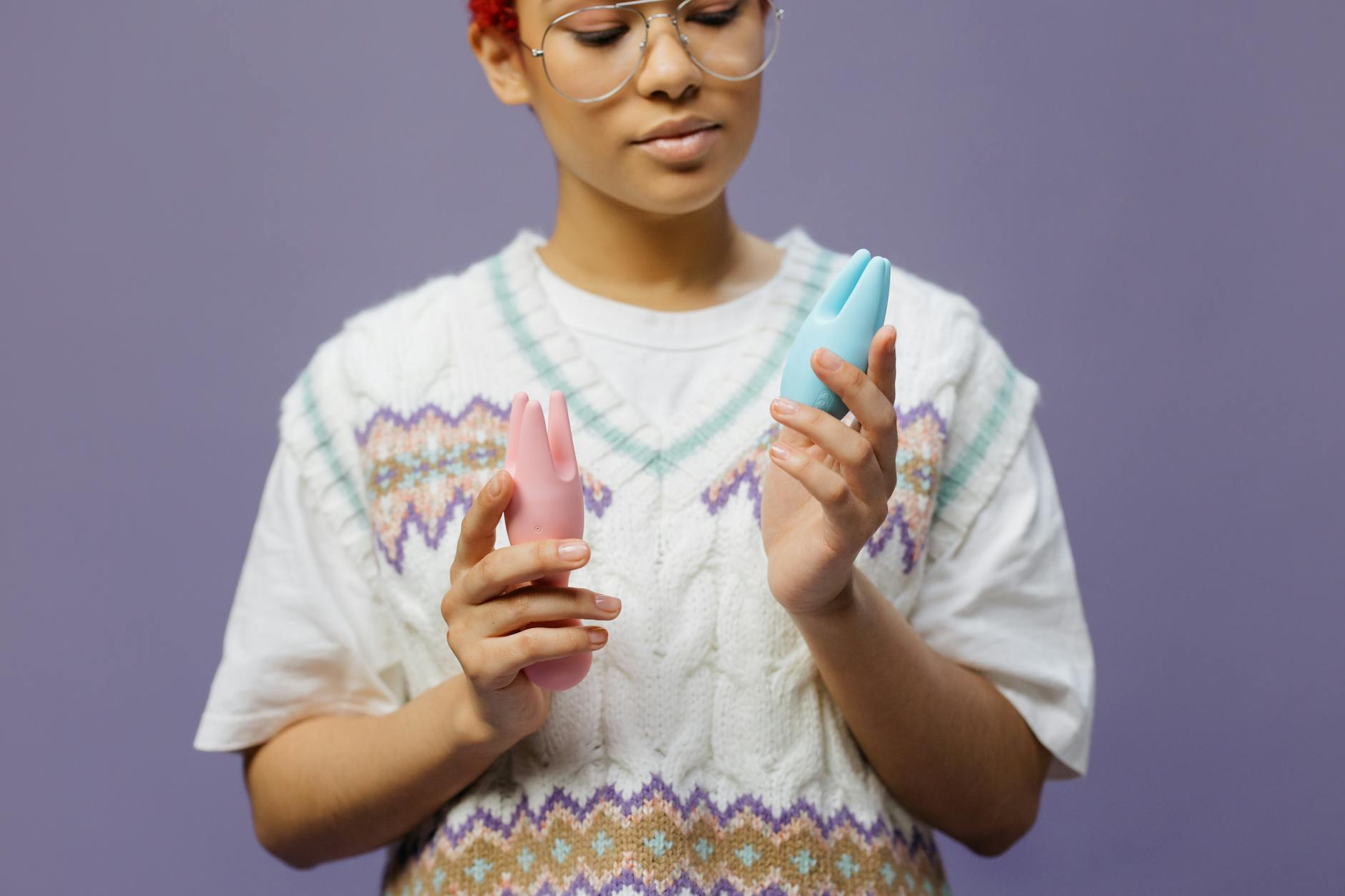
If you've spent years faking it, your body has learned to perform instead of feel. That's not a judgment. It's a protection mechanism that made sense at the time. But it's also a pattern that's impossible to break without literally rewiring how you experience arousal. And you can't rewire something alone while still performing for a partner.
Here's what actually happens when you've faked orgasms for years. Your nervous system stops sending pleasure signals the way it used to. Your brain learns that the goal is not your orgasm but his, hers, or theirs. You become so skilled at reading a partner's rhythm that you lose track of your own. And the longer this goes on, the harder it gets to access genuine sensation. It's not that you've lost the capacity. You've trained yourself out of it.
Lemon vibrators, specifically clitoral suckers like the Lem, help because they interrupt that pattern. They demand honesty. You can't fake a response to a lemon sucker the way you can to a partner's touch. The suction either feels good or it doesn't. There's no pretending.
Most people don't wake up one day deciding to fake it forever. They do it once or twice for a dozen reasons. Partner pressure. Shame about your own arousal. Mismatched timelines. The belief that your pleasure is inconvenient. After a while, faking becomes your default. And the longer it continues, the more real pleasure becomes a threat.
Here's why: genuine orgasm requires vulnerability. It requires you to prioritize your own sensation over someone else's ego. It requires you to say no when something doesn't feel good. If you've spent years not doing those things, the vulnerability required for real pleasure can feel dangerous. So your body keeps faking.
The psychological cost is significant. Research in relationship counseling shows that partners who've faked consistently report lower sexual satisfaction, lower relationship satisfaction, and a persistent sense of disconnection. They also report profound shame. You're lying every time, and you know it, and that erodes trust in the relationship even if the partner never finds out. Maybe especially then.
Lemon vibrators work differently than partnered sex because they work on your nervous system alone. You're not managing anyone else's pleasure. You're not reading anyone else's cues. You're just following sensation.
Start with pattern one on the lowest setting. Don't aim for orgasm. Aim for noticing. What actually feels good right now? Not what should feel good. Not what you've trained yourself to respond to. What does.
Many people who've faked for years report that the first few sessions with a clitoral vibrator feel strange or even uncomfortable. That's not because the vibrator is wrong. It's because real sensation feels unfamiliar. You've built a wall between your body and what it actually feels. The vibrator is touching that wall. Of course it feels weird.
Keep going. After three or four sessions, the wall starts to thin. You might feel something that's not an orgasm but also not nothing. A flutter. A tightening. A moment of genuine response. That matters. That's data. That's your body remembering how to be honest.
If you've faked for three years, don't expect to rebuild authentic pleasure in three weeks. Your nervous system doesn't work that way. Rebuilding takes time because you're essentially retraining your body to trust its own signals.
Week one to two. Exploration phase. You're figuring out what actually feels good, separate from what you thought you were supposed to enjoy. You might discover that you've never actually had an orgasm, or that the orgasms you did have didn't feel like you remember. That's information, not failure.
Week three to four. Pattern recognition. You notice that certain rhythms, certain patterns, certain intensities get you closer to actual response. You might not orgasm yet, but the sensations are getting more real. You're building a map.
Solo exploration with lemon vibrators is where you rebuild your own capacity. That's non-negotiable. You cannot fake your way back to authenticity. But at some point, you need to decide whether this partnership can hold this truth.
If you have a partner, here's what needs to happen. You tell them. Not in the heat of the moment. Not during sex. In a conversation where you're both clothed, both calm, and both ready to actually listen. You say: I have not been honest about my pleasure. That's on me. Here's what I'm doing to change it. Here's what I need from you.
That's terrifying. And it's necessary. Because if you rebuild authentic pleasure but keep faking in the relationship, you've just rebuilt something you can't use. You're back to the beginning.
Some partners respond with curiosity and openness. Some respond with defensiveness or shame. If your partner responds by making your honesty about your pleasure into his or her problem, that's information too. That tells you something about whether this relationship can hold truth.
Clitoral suckers like the Lem are different from traditional vibrators. Instead of internal vibration, they use suction and air-pulse technology. This means they stimulate in a way that feels less like traditional sex and more like something entirely new. Your body doesn't have the same learned patterns around suction. So you can't fall back on fake responses. The suction either resonates with your nervous system or it doesn't.
Start on the gentlest setting. The goal is not to chase orgasm. The goal is to learn what genuine arousal feels like, moment by moment. Some sessions you'll feel a lot. Some sessions you'll feel almost nothing. Both are okay. You're gathering data.
Many people report that their first real orgasm using a clitoral vibrator feels different than anything they've experienced before. More subtle. More localized. Less like a performance and more like a chain reaction happening inside your own body. That strangeness is a sign that something real is happening.
Before you rebuild with a partner, you have to rebuild with yourself. That means asking hard questions. Why did you start faking? Was it pressure, or was it shame about your own pleasure? Was it the belief that your orgasm was inconvenient, or was it that you didn't know what you actually wanted?
Those answers matter because they determine what happens next. If you faked because a partner pressured you, rebuilding authenticity might mean leaving that partner. If you faked because you were ashamed of your own sexuality, rebuilding might mean working with a therapist on that shame. If you faked because you genuinely didn't know what felt good, rebuilding is what lemon vibrators are for.
You deserve pleasure that belongs entirely to you. Not shared with a partner's ego. Not performed for someone else's satisfaction. Yours. That's the foundation you're rebuilding.
Orgasm is not the goal. Real sensation is. If you've been faking for years, your nervous system might need more than a few weeks to remember how to respond authentically. Keep using the vibrator without the pressure of orgasm. Pleasure without orgasm is still real pleasure. Still worth having. If six months in you're still experiencing no sensation at all, talk to a gynecologist. Sometimes medication, hormone levels, or pelvic floor tension can suppress sensation, and those are worth investigating.
Yes, and it can be beautiful. But only after you've had the conversation about honesty. Only after you've agreed that real pleasure matters more than the performance you both got comfortable with. Some couples find that introducing a tool designed for authentic sensation actually helps them rebuild real intimacy. Others discover that the partnership was built on the very performance you're trying to escape from. Both outcomes are information.
Completely normal. You might feel guilty toward a partner you've been dishonest with. You might feel guilty toward yourself for waiting so long. You might feel guilt just for prioritizing your own pleasure, which the world has trained you to see as selfish. It's not. Your pleasure is not a threat to anyone else's. It's actually a requirement for real intimacy. Feel the guilt. Acknowledge it. And keep going.
Start at the lowest. Many people who've been faking jump straight to high intensity because they're chasing that orgasm. Don't. Low intensity lets you actually feel what's happening in your body. You can build from there. And honestly, for a lot of people rebuilding after years of faking, the gentler settings are where the most authentic sensation lives.
Honestly. You say: I need to spend time understanding my own body without the pressure of partnered sex. This is not about you. This is about me rebuilding something I lost. Most partners can understand that when it's framed as rebuilding rather than rejection. And if a partner can't understand that you need time to reconnect with your own pleasure, that's very useful information about the partnership.
That's possible, and it's okay. Sometimes rebuilding authentic pleasure means discovering that the person you've been faking with isn't actually compatible with your sexuality. That's a heartbreaking discovery, but it's also honest. And honesty is the foundation of any real relationship. If you get there, you get to make a choice about what happens next. That choice is yours.
Your pleasure belongs to you. After years of faking, reclaiming it is an act of radical honesty with yourself. Start there. Everything else follows.