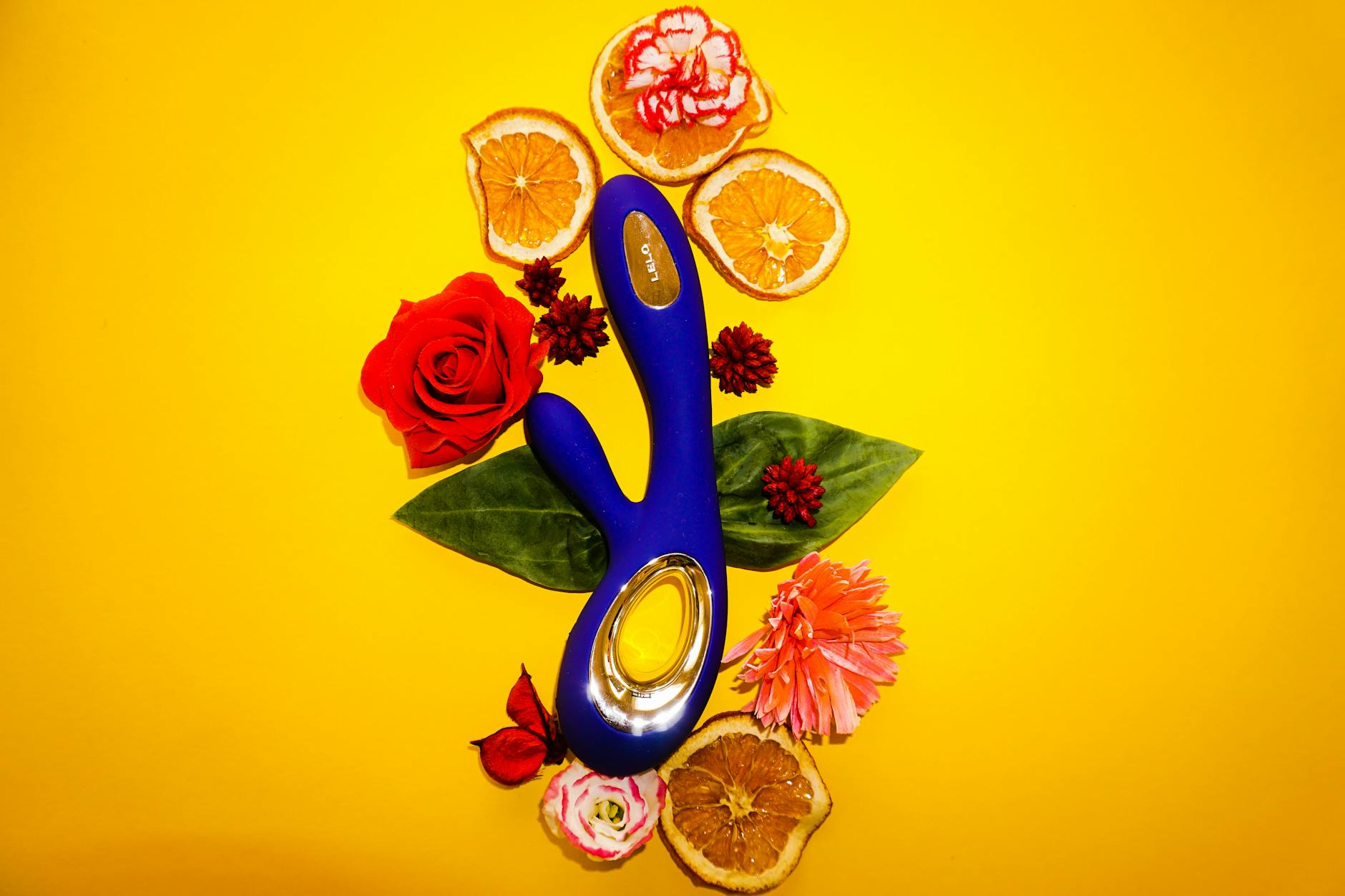
The bridge between solo and partnered pleasure
Honestly, this might be the most vulnerable conversation you have with a partner. You've spent months or years learning exactly what your body needs. You know which patterns make you come. You know the rhythm, the pressure, the angle. Now you have to translate that private knowledge into shared space, which feels impossibly exposed.
Here's what I tell couples in my practice: introducing a lemon vibrator isn't about proving you need a toy. It's about inviting your partner into pleasure that works. That's actually a gift, not a deficit.
Why the transition feels harder than it sounds
There are three things tangled up together that make this moment feel risky. First, you're worried a toy signals that your partner isn't enough. They're probably worried the same thing. Second, showing someone your pleasure patterns feels more intimate than having sex sometimes. Third, you're moving from total control (solo play) to shared responsibility (partnered play), which genuinely does require trust.
But here's the data twist: couples who use vibrators together report higher sexual satisfaction and more orgasms overall. Not because toys replace partners. Because toys remove the pressure to perform, which somehow makes everything hotter.
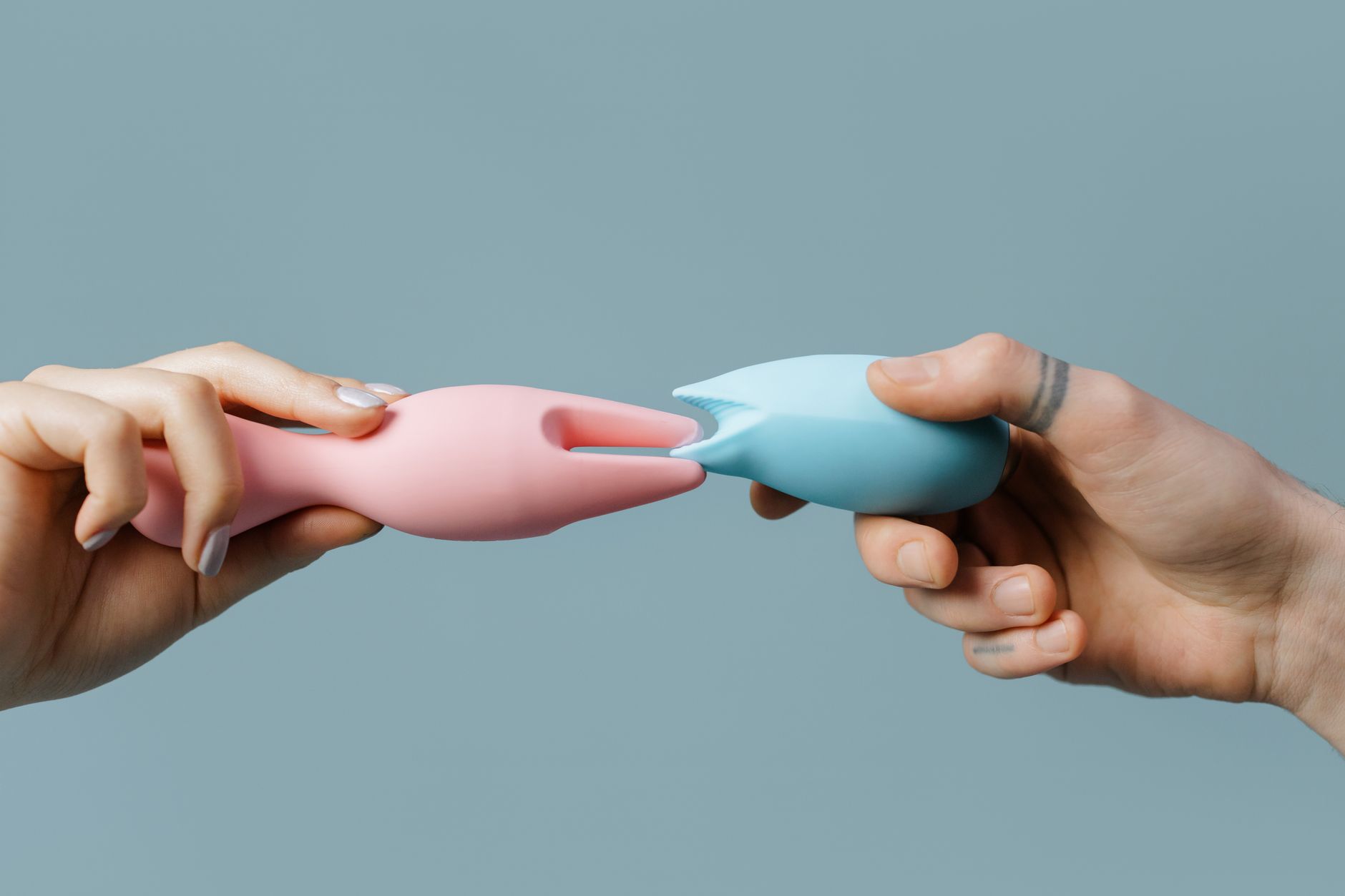 Photo by cottonbro studio on Pexels
The conversation before the toy arrives
Don't introduce a lemon vibrator by surprise. That's a grenade, not foreplay. Instead, pick a normal moment. Not in bed. Not right before sex. Somewhere neutral where you can actually talk.
Start simple: "I've been exploring solo, and I found something that really works for my body. I'd like to try it with you sometime. I'm curious what you think." That's it. You're naming it, you're being honest, and you're asking permission.
Listen to what your partner says back. If there's hesitation, ask why. Is it insecurity? Confusion? Fear they're doing something wrong? Each one needs a different answer. "I'm worried you don't need me" is not the same as "I'm not sure how that works." Get specific.
The actual mechanics of introduction
When you're ready to actually use your lemon clitoral vibrator together, think of it as collaborative foreplay, not a main event. Start clothed. Start with conversation still happening. Show your partner what patterns you like. Let them hold the toy first, so they get a sense of the weight and feel.
When you're ready to use it on yourself with them present, you can do it alone at first. Then, once you're comfortable, you can guide their hand. "A little lower, now press just there, now turn it up to level three." This isn't criticism. It's information. It's also incredibly hot because your partner gets to watch you come while learning exactly how.
Some people want their partner to do the work entirely. Some want to control it themselves while a partner focuses on other kinds of touch. Some want the lemon sucker on the clitoris while their partner is inside them. There's no wrong shape here. You get to write the script.
When your partner wants to take the lead
If your partner wants to be the one wielding the toy, that requires a different kind of communication. You've spent solo time knowing exactly what you need. Now you have to trust someone else to find it. That's hard.
Give clear feedback in real time. "That feels amazing, don't change it." "A tiny bit lower." "Slower." Don't wait until after to critique. In the moment, your partner needs to know what's working so they can stay there.
It also helps to name the pleasure you're feeling. Not dirty talk necessarily, just honesty. "Oh god, that's it" or "I love when you do that" gives your partner concrete data. They're learning the map of your body in real time.
The emotional layer that matters more than technique
Here's what I've learned in my practice: the toys don't change the sex. The vulnerability does. When you admit that you like strong, focused stimulation, when you show your partner exactly where and how, when you let them see you completely focused on your own pleasure, something shifts in the relationship.
That shift is often what couples think they're missing. Not the toy. The permission.
If your partner is hesitant at first, that's normal. Lemon vibrators look different from what they might expect. The suction feeling is weird until you understand it. If they seem uncomfortable, you can pause and ask what's up. Sometimes it's just "I need a second to adjust to the visual." Sometimes it's deeper. Either way, talking about it now prevents resentment later.
What changes and what doesn't
Using a lemon vibrator with a partner doesn't mean your body gets faster orgasms. Doesn't mean all your sex suddenly works better. Doesn't mean the emotional stuff resolves. What it does mean: you're not pretending anymore. You're not managing your partner's feelings about your pleasure. You're just having it, together.
Some couples find that introducing toys completely transforms their sex life. Others notice a small shift. Some find that the toy is just one tool in a bigger puzzle of communication and presence. All of those are fine outcomes.
Troubleshooting the awkward moments
If you've tried introducing a lemon vibrator and it felt clumsy or weird or he shut down, that doesn't mean it won't work later. Sometimes it's timing. Sometimes it's the way you brought it up. Sometimes it's that your partner needs more reassurance than you initially offered.
You can always circle back. "Hey, I know we tried that thing and it felt off. Can we talk about what happened?" That conversation often matters more than the sex part. It says I care more about understanding you than I care about being right about this.
If your partner genuinely doesn't want to use toys, that's information you get to have. Some people just aren't comfortable with it. That's different from "I'm uncomfortable right now but might be later." The difference is whether there's curiosity underneath the resistance.
The first time is just the beginning
That first time using a lemon clitoral vibrator together probably won't be peak orgasm. It'll be a bit awkward. There'll be logistics to figure out. Someone will probably laugh. That's all fine. Sex with a partner you actually trust to tell the truth about pleasure gets better over time, not worse.
Your body knows what it likes. Your partner gets to learn. You get to be generous with that information. And somewhere in that exchange, pleasure stops being something you protect and starts being something you share.
People also ask
What if my partner feels threatened by my vibrator?
That's about insecurity, not your vibrator. Have the conversation separate from the sexual moment. "I value what we have. This isn't about needing something else. It's about my body responding to different kinds of stimulation." If your partner stays threatened after you've explained clearly, that's a relationship issue bigger than the toy. You might benefit from working with a couples therapist or finding a partner whose insecurity doesn't depend on your pleasure being limited.
Should I use a lemon vibrator the same way solo and partnered?
Not necessarily. When you're alone, you can go fast, stay in one spot, build intensity exactly as your body wants. With a partner, you might move slower so there's room for other touch. You might focus on how the toy feels rather than just reaching the finish line. You might discover you like things differently depending on who's holding it. That's not wrong. That's expansion.
How do I introduce lemon sexual toys without making it seem like I've been "fake" during sex with my partner?
Be clear about the timeline. "I discovered this while I was exploring solo, and I found it makes my body really happy." That's a neutral statement. It's not "you weren't doing it right." It's "this is a thing my body likes." Most secure partners get that. If yours doesn't, the problem isn't your honesty.
Can we use a lemon clitoral vibrator during penetrative sex?
Absolutely. A lot of people prefer coming with combined stimulation. Your partner can be inside you while you or they use the suction vibrator on your clitoris. Takes some coordination, but it's worth figuring out. Some positions work better than others. Spooning, for example, makes this easier than missionary.
What if we try it and it feels disconnected instead of intimate?
That's real. Some people feel like toys add distance. If that's you, you can use them for solo sessions and stick with partner-only sex when you're together. Or you can try a different approach. Some couples find that using a toy while maintaining eye contact or physical affection helps. Others need more time for it to feel normal. You don't have to force intimacy through toys if it doesn't land for you both.
How often should we be using lemon adult toys during partnered sex?
As often as you both want to. There's no "right" frequency. Some couples use them almost every time. Others bring them out once a month. Some introduce them for a few sessions and then go back to partnered-only for a while. Your pleasure doesn't have a schedule. It has a rhythm that you and your partner get to discover together.
Introducing a lemon vibrator to partnered pleasure is one of the most direct ways to say: my pleasure matters, your pleasure matters, and we're going to figure this out together. That conversation might feel risky. But on the other side of it is usually a kind of intimacy that makes the risk worth taking.