At some point, you made a choice to stop paying attention to your body. Not consciously. It happened quietly. Maybe after a partner made you feel small. Maybe after years of sex that felt obligatory instead of pleasurable. Maybe you got so tangled up in what you thought you should want that you stopped knowing what you actually wanted.
Body avoidance is a coping mechanism. It works. It keeps you safe from disappointment, from vulnerability, from the sting of wanting something and not getting it. And then one day you realize you've spent five years or ten years or twenty years living in your neck up, like your body is something that happens to you instead of something you inhabit.
The good news: reconnection is possible. It's not magic. It's patient, intentional, and it starts small.
When you've spent years disconnected from physical sensation, your nervous system has learned not to trust the signals it sends. You might feel numb in your genitals even when there's stimulation. You might have intrusive thoughts that hijack arousal before it builds. You might freeze mid-experience, suddenly hyperaware of your body in a way that feels unsafe.
This isn't broken. This is your body saying: "I learned not to feel because feeling wasn't safe. Prove it's safe now."
That proof can't come from words. It has to come from experience. Small, repeated, positive experiences where you are in complete control and nothing bad happens. That's where lemon clitoral vibrators enter the picture. They're not magic wands. They're tools for building evidence that your body can feel good, that pleasure is available to you, and that you can stop it whenever you want.
The mistake most people make when reconnecting with pleasure is treating it like homework. You set aside time, you get undressed, you expect results. Then nothing happens and you feel worse.
Instead, start without expectation. Explore a lemon vibrator fully clothed if you need to. Feel the weight in your hand. Notice the material. Turn it on at the lowest setting and hold it against your forearm or your collarbone. Notice the sensation. No goal. Just data gathering.
Once the vibration itself feels normal, not weird or clinical, you can move closer. Over pants, against the outside of your thigh. Again, no goal. You're teaching your nervous system that vibration equals neutral or good, not scary.
This phase can take days or weeks. That's not wasted time. That's recalibration.
The clitoris has eight thousand nerve endings concentrated in a space smaller than a pea. That density means it's exquisitely sensitive, which is beautiful when you're aroused and excruciating when you're not.
If you've been numb or disconnected, direct clitoral stimulation from a lemon vibrator might feel too intense right away. That's useful information. It means your sensitivity is there. It's just defended.
Try this: place the vibrator on the lowest setting on your inner thigh first, nowhere near your genitals. Feel the vibration travel. Move it gradually toward your vulva but stay on the outer labia. Let your body get used to the sensation moving closer. You're building a map of pleasure that starts at the edge and slowly expands.
When you're ready to touch the clitoris itself, try placing the vibrator with one layer of clothing between you and the device. Underwear, shorts, whatever. The barrier softens the intensity and buys you psychological space to feel safe.
Here's what I tell my clients: numbness during reconnection usually isn't physical. Your body might feel sensation just fine. Your brain is just refusing to let you experience it as pleasure because pleasure feels risky.
If you feel vibration but it doesn't feel good, you're not broken. You're protected. The goal isn't to force it to feel good. The goal is to spend enough time with the sensation that your brain gradually decides it's safe.
This can mean you use a lemon vibrator for five minutes and feel almost nothing, and that's completely fine. You did the work. Your nervous system got a little evidence that pleasure exploration didn't hurt. You can stop. Come back tomorrow.
Over time, little by little, the sensation shifts from neutral to interesting to actually pleasurable. It's not fast. But it's real.
One of the biggest gifts of reconnecting solo is that you get to design the experience entirely. You choose the time, the place, the pace, the intensity, when to stop.
Maybe you explore only when you're not tired. Maybe you use a timer so you don't get stuck in your head about how long is normal. Maybe you light a candle or play music or do absolutely nothing. Maybe you touch other parts of your body while using a clitoral vibrator. Maybe you use two devices at once. Maybe you discover you like it better with clothes on.
There's no right way. The rightness comes from it being your choice.
One practical boundary: decide in advance when you'll stop, not during. It's easier to stay present when you've already decided "I'm doing this for ten minutes" than when you're in the moment trying to figure out if you should keep going. That decision-making pulls you out of your body.
You'll notice it in small ways. You'll think about pleasure without immediately feeling guilty. You'll touch yourself without flinching. You'll use a lemon vibrator and feel something that registers as actual sensation, not numbness. You'll have an orgasm and be surprised, not suspicious.
That's not the end point. That's the beginning. Once you've rebuilt your individual relationship with pleasure, you can decide what you want with partners, if you want that at all. Maybe partnered sex becomes interesting again. Maybe it doesn't. Both are valid.
What matters is that your body stops being a place you avoid and becomes a place you can inhabit. That takes time and gentleness and tools that work. A lemon sucker or clitoral vibrator is one of those tools because it gives you control and immediate feedback and zero judgment.
If you're using a device like the Lemon for the first time while rebuilding confidence, start at pattern one and stay there for the first week or two. You're not chasing intensity. You're chasing familiarity. Once pattern one feels normal, not weird, you can experiment with patterns two and three.
Many people reconnecting with their bodies find that the light suction patterns feel better than pure vibration. Suction is gentler. It pulls rather than oscillates. It feels less clinical. If that's your experience, honor it. You're not supposed to prefer what someone else prefers.
Know that numbness sometimes returns on stressed weeks or during hormonal shifts. That's not backsliding. That's your nervous system doing what it does. The work you've done doesn't vanish. It's there waiting for you when you're ready.
If you're in a relationship and want to rebuild pleasure confidence alongside your partner, this requires a completely separate conversation from the solo work. Meaning: don't mix them up.
Let your partner know that you're reconnecting with your own body right now and you need some space to do that alone. Most partners actually respect that boundary. Frame it as "I want to figure out what works for me so I can bring that back to us" rather than "I need to do this instead of with you."
Once you've rebuilt some confidence solo, then you can explore together. And you can bring what you learned. You can say "I like this intensity" or "I prefer this position" because you actually know it from your own experience.
There's no timeline. Some people report feeling a shift within days. Others take weeks or months. Your nervous system isn't on anyone's schedule. What matters is consistency, not speed. If you explore gently twice a week, you'll make more progress than if you binge once a month and then disappear. Small, regular contact with pleasure is how you rewire.
Shame is common when reconnecting. You might feel weird about your body or foolish for exploring or guilty for wanting pleasure. That's not a sign to stop. That's a sign your nervous system is noticing the change. Shame usually softens with repetition. Do the thing anyway. The shame will get quieter.
Yes, but talk to your doctor about the numbness itself first. Some medications genuinely reduce sensation. A vibrator can help you explore what sensation you do have, but it won't override medication effects. What it can do is help you find pleasure in the sensation that exists, rather than chasing the sensation you remember.
You don't have to. It's your private practice. That said, if you're in a committed relationship, a basic version of the conversation helps. Something like: "I'm exploring what feels good to me solo right now and I'll let you know when I'm ready to share that." Most partners appreciate clarity over mystery.
Both are normal. Quick orgasms sometimes happen when your body is hungry for sensation after years of avoidance. Not orgasming also happens because your brain is still guarding. Neither means anything about you. The goal is presence and sensation, not performance. The orgasm is a bonus.
Lemon vibrators, including suction-based designs like the Lemon clitoral sucker, work well for reconnection because you can control intensity precisely and the sensations feel modern rather than clinical. What matters most is that you pick something that feels safe to you. If another device calls to you, that's also right. Trust your intuition about what feels approachable.
Every time you choose presence over avoidance, you're rewiring years of protective numbness. That's brave work. It doesn't look dramatic. It looks like you, alone, with a vibrator, breathing, noticing, staying curious instead of judging.
Your body is waiting for you to come back. It's been waiting the whole time. A lemon vibrator is just a tool to help you show up. The confidence comes from the showing up. Again and again. Until one day you realize your body isn't a thing you avoid anymore. It's a place you live.
If you're ready to explore further, reach out. I'm here to help.

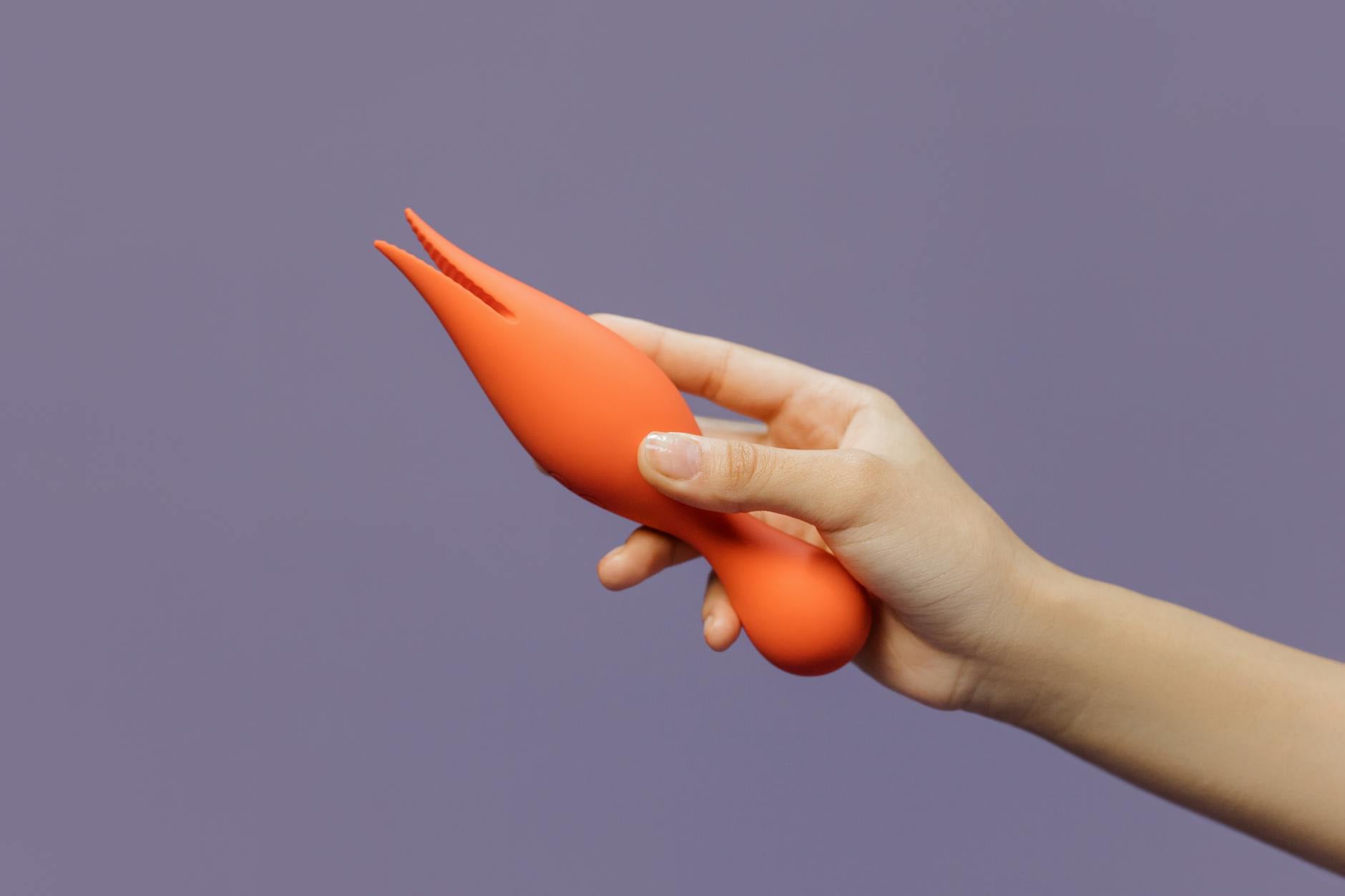 Photo by