
Let's start with what's actually happening
Your pleasure didn't disappear. I know it might feel that way, but the neural pathways that fire when you're stimulated haven't gone anywhere. What changed is the speed, intensity, and shape of how sensation travels through your body.
Hormonal shifts matter because hormones aren't just abstract concepts. They're chemical messengers that affect tissue thickness, blood flow, lubrication, and nerve sensitivity. When estrogen or testosterone fluctuate, these physical markers shift. But here's what matters more: knowing that shifts aren't the same as loss.
What hormonal changes actually do to sensation
When hormones fluctuate (whether from natural cycles, birth control, perimenopause, or other life changes), several things happen in the genitals:
Tissue becomes thinner and more delicate. Estrogen keeps vaginal and clitoral tissue plump and elastic. Lower estrogen means tissue can feel drier and more sensitive to friction.
Lubrication changes. This is the obvious one, but it matters. Less natural lubrication means direct friction can feel uncomfortable or numb instead of pleasurable.
Blood flow patterns shift. Arousal depends partly on blood rushing to the clitoris. Some hormonal states make this slower, which means you need more time or more direct stimulation to feel sensation building.
Nerve sensitivity can swing both ways. Sometimes hormonal changes make the clitoris feel more sensitive (sometimes too much so). Other times, sensation feels duller or more scattered.
Here's what doesn't change: the clitoral nerve bundle still contains 8,000 nerve endings. Your brain's pleasure centers still light up. Your capacity for orgasm hasn't vanished.
Why clitoral vibrators work differently during hormonal shifts
Most vibrators rely on speed and friction. If your tissue is thinner or your arousal is slower, friction can actually feel uncomfortable. Suction-based lemon vibrators work on a different principle entirely.
Instead of vibrating against the clitoris, they create a gentle pulling sensation that stimulates the entire clitoral structure. This approach has two advantages when hormones have shifted your sensation:
First, suction doesn't depend on friction. If your tissue feels sensitive or your natural lubrication is lower, suction feels gentler and more concentrated than a traditional vibrator might.
Second, suction creates a broader area of stimulation. The clitoris extends internally into the body. Traditional vibrators often only reach the external tip. A clitoral suction vibrator engages more of the structure, which can feel like a return to fuller sensation when hormonal changes have made things feel narrow or shallow.
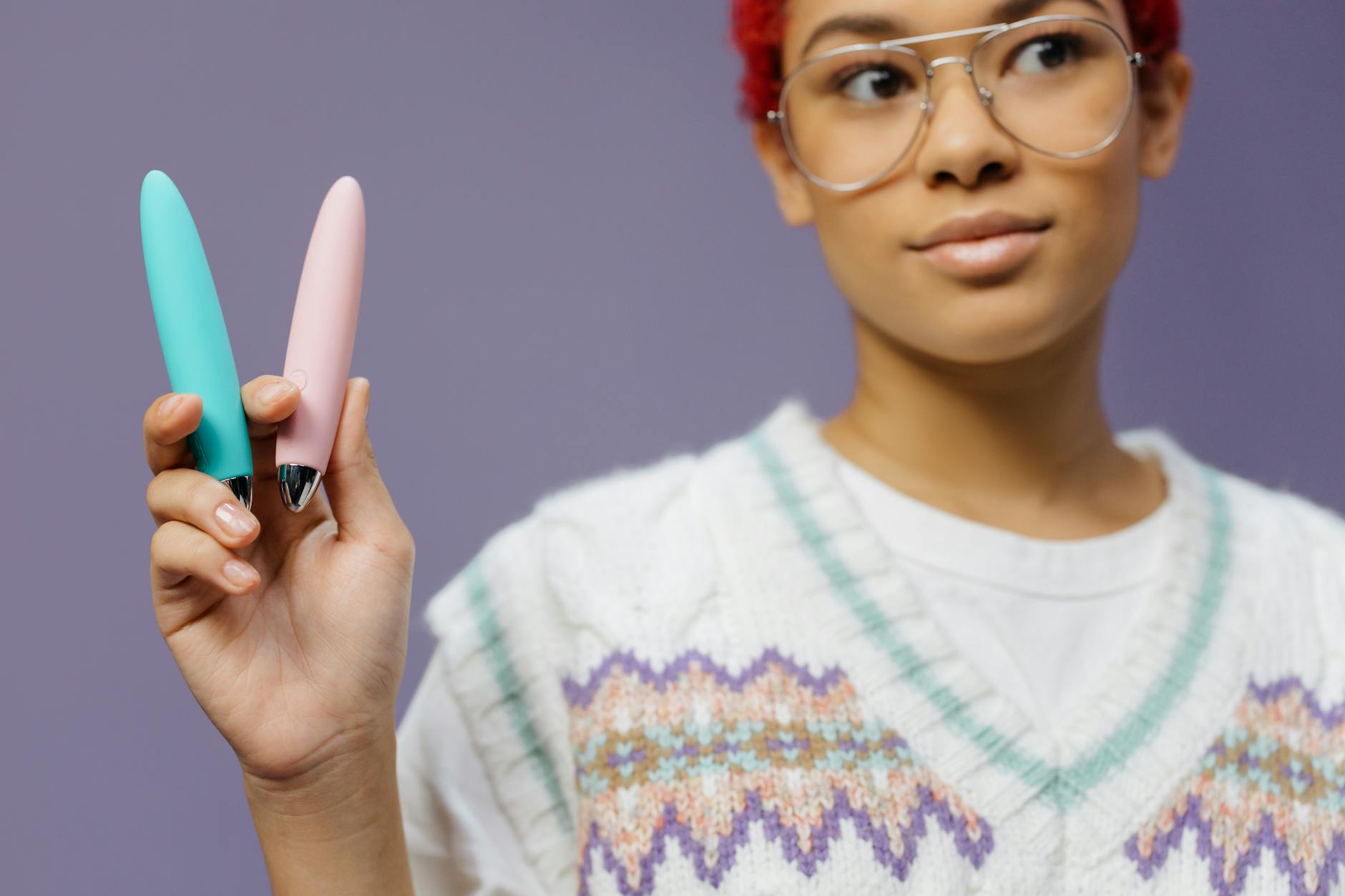
Photo by cottonbro studio on Pexels
The warm-up shift you need to know
One of the most consistent changes people report after hormonal shifts is that arousal takes longer to build. If you've always been able to go from zero to sensation in five minutes, and now it takes twenty, that's not a malfunction. It's a real physiological change.
This is where the approach matters more than the tool. Lemon vibrators can speed things up, but you're actually building something better: deeper arousal.
Start your session without the vibrator. Spend five to ten minutes on sensation that doesn't aim anywhere. This might be touching your thighs, your breasts, your neck. The goal here is to activate your arousal system without the pressure of "getting there." This is especially important after hormonal changes because your body's natural lubrication and blood flow might be slower. Priming them first makes everything feel better.
Then introduce the vibrator. Start on the lowest setting. Most lemon vibrators have multiple intensity levels. If you're used to jumping to high intensity, resist. Spend time with pattern one or two. You're teaching your nervous system that there's no rush.
Lubrication matters more now, even though it's awkward
I know this feels redundant. You're already dealing with the lubrication shift itself, and now I'm saying you need more. It's fair to be annoyed. But here's the practical truth: adding external lubrication changes the entire experience for the better.
Use a water-based lube (silicone lube can degrade some vibrator materials over time). Apply it generously. Lube isn't compensation for something missing. It's a tool that makes sensation sharper and more comfortable when your tissue is responding differently to hormonal changes.
Water-based lube also reduces friction on tissue that might feel delicate. This matters whether you're using a lemon clitoral vibrator or not, but it especially matters with vibrators because the repeated stimulation adds friction that lube actually addresses.
The emotional piece that changes everything
Here's where most advice about pleasure after hormonal changes misses the mark: it focuses entirely on the physical.
Yes, tissue changes. Yes, arousal takes longer. But what actually disrupts pleasure most often is the story you're telling yourself about these changes. If you interpret slower arousal as "I'm broken" instead of "my body is responding to hormonal shifts," that interpretation hijacks your entire nervous system.
Arousal requires a relaxed nervous system. The moment you move into worry or self-judgment, your body tightens. Blood flow to the genitals literally decreases. Your natural lubrication stops. You've just turned a manageable shift into an actual problem.
This is where working with a partner (if you have one) gets tricky. If you're not on the same page about what's changing, the partner might feel rejected ("she doesn't want me") and you might feel pressured ("he thinks I'm broken"), and suddenly you've got a relational problem layered on top of a physical one.
The conversation to have is this: "My body is responding to hormonal changes. This means I need more time to warm up and I might need additional lubrication. This isn't about you or my desire. It's biology. How do we work with this together?"
Then you actually work with it. You try new tools. You try new approaches. You build new rituals around pleasure instead of assuming the old ones will work the same way.
When to get medical support
If pleasure has completely disappeared and hormonal changes don't explain it, talk to a doctor. If sensation has shifted painfully (literally, not emotionally), that's treatable. If you're experiencing dryness severe enough to limit activity, topical treatments exist and work.
But most hormonal shifts in sensation? They're normal, manageable, and navigable with the right information and tools.
How to actually start
Pick a time when you have at least thirty minutes. Set up space that feels good to you. Have water nearby. Have lube nearby. Have your lemon vibrator nearby.
Start without it. Warm your body up. Then introduce the vibrator on the lowest setting. Notice what feels different from before. Don't judge it. Just observe.
You might find that sensation feels richer in some ways. You might find that your orgasms have a different shape. You might find that you need something different from a partner. None of these outcomes are wrong.
Your pleasure didn't go away. The pathway just shifted. And a tool like a lemon clitoral vibrator isn't about forcing the old path to work again. It's about discovering the new one.
People also ask
Why does my clitoris feel numb after hormonal changes?
When hormones drop, blood flow to genital tissue decreases and nerve sensitivity can dull. This feels like numbness but it's usually temporary or manageable. Your clitoris still has all 8,000 nerve endings. They're just responding to different chemical signals. A suction vibrator like a lemon vibrator engages more of the clitoral structure than traditional vibrators, which many people find helps sensation feel less narrow.
Can lemon vibrators help if I'm on birth control?
Absolutely. Hormonal birth control affects sensation for many people. Some report decreased desire, others report that arousal is slower or that sensation feels different. A clitoral vibrator doesn't replace what hormones shifted, but it can help you find pleasure in a new rhythm. Many people actually report deeper satisfaction after adjusting their approach, because they're no longer chasing the old sensation pattern.
How long does it take for sensation to feel normal after hormonal changes?
It depends on what caused the change. If it's a natural cycle, days to a few weeks. If it's a longer-term hormonal shift, usually several weeks as your body adjusts. Some people find their new normal is different but actually more satisfying than before. Others use tools like lemon vibrators to bridge the adjustment period. Give yourself at least four to six weeks before deciding something's truly not working.
Should I be using a vibrator if sensation feels sensitive or painful?
Depends on the kind of pain. Sharp pain or pain during arousal that wasn't there before needs a doctor's evaluation. Increased sensitivity (everything feels too intense) is different and often manageable with lower vibrator settings, more lube, and longer warm-up time. Start on the gentlest setting possible.
Does my partner need to know I'm using a vibrator more now?
If you're in a partnered situation, yes, eventually. Not as a confession or a problem solve, but as information. "My body needs something different right now. Here's what I'm trying." This turns it into a collaborative thing instead of a secret. Many partners actually feel relieved to understand what's happening instead of interpreting changes as rejection.
Can lemon vibrators work for multiple orgasm styles?
Yes. The suction pattern of a lemon clitoral vibrator engages different nerve pathways than friction-based vibrators. Some people find this opens up multiple types of orgasms they couldn't access with other tools. If you're exploring whether your body can do something new after hormonal changes, trying different vibrator styles is worth it. You might surprise yourself.
The actual takeaway
Hormonal changes are real. Sensation absolutely shifts. But shift doesn't mean the end.
Lemon vibrators work differently than traditional vibrators, and that different approach often fits better when your body's responding to hormonal changes. Suction engages the clitoris more broadly, doesn't depend on friction, and creates sensation that feels less like battering and more like awakening.
Start slow. Use lube. Warm up longer than you used to. Give yourself time to figure out what your body actually wants now, not what it wanted before.
Your pleasure didn't disappear. You're just learning a new language for it. That's actually better than going back to the old one.