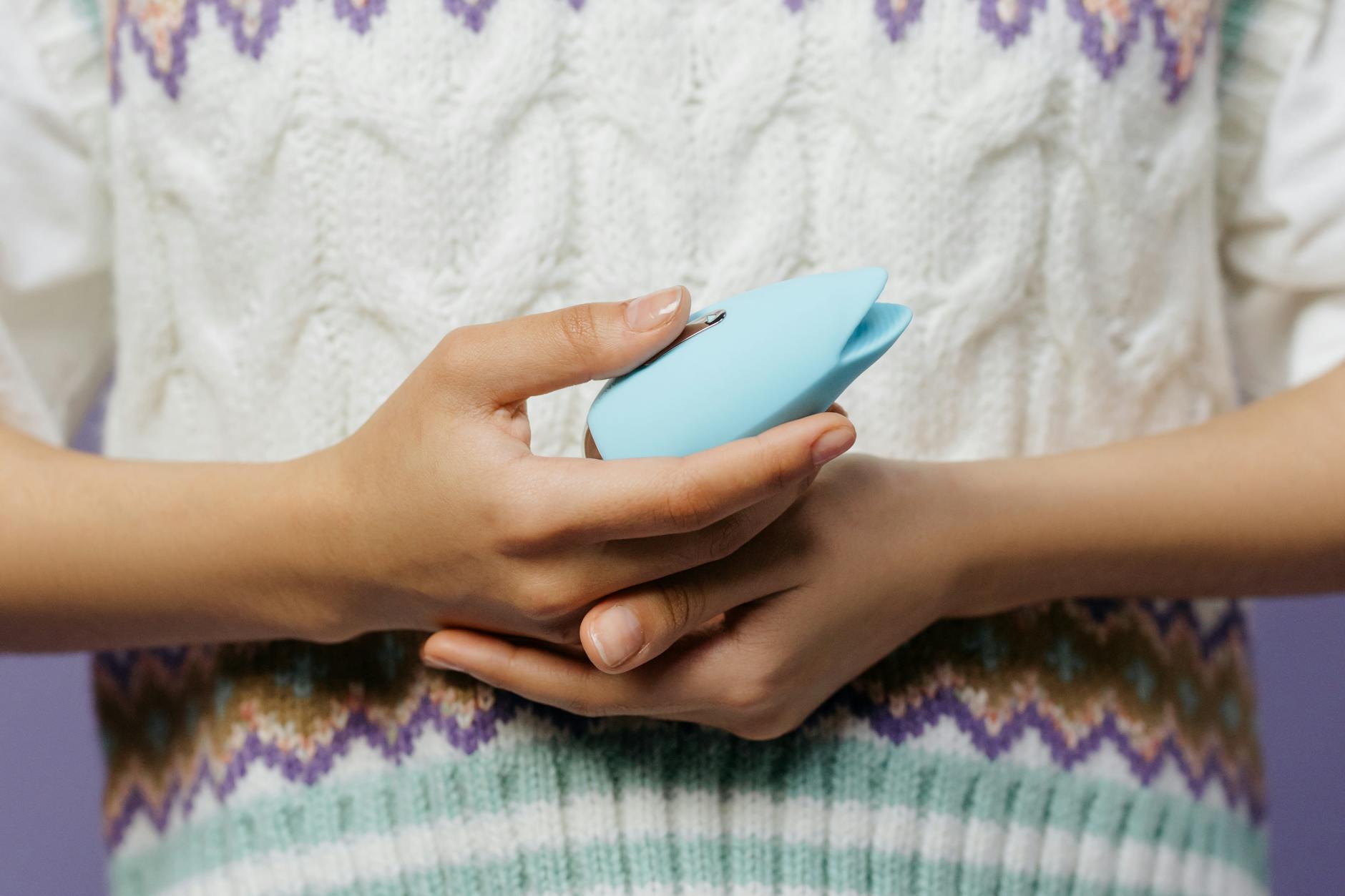
How to Use Lemon Vibrators When You Want to Strengthen Pelvic Floor and Enhance Sensation
Here's the thing about pelvic floor strength: most people think it's just about Kegels, which is like thinking biceps only exist for clenching fists. Your pelvic floor is actually responsible for arousal, orgasm intensity, and sensation throughout your whole body. And the good news is that using tools like Lemon clitoral vibrators can actively strengthen those muscles while making pleasure feel exponentially better.
I work with couples all the time who've heard "do your Kegels" and done them dutifully, alone, with zero feedback and minimal results. They're bored. They feel like they're exercising, not exploring. Then they discover that pairing pelvic floor work with intentional vibration changes everything.
This is about building a practice that feels good, strengthens what matters, and makes orgasms feel like something you've actually earned.
Why pelvic floor strength matters for sensation
Your pelvic floor muscles wrap around your urethra, vagina, and anus. When they're weak, blood doesn't flow as efficiently to the vulva, which means less engorgement, less sensation, and orgasms that feel shallow or distant. Strong pelvic floor muscles act like a vise around the sensitive tissue, intensifying every bit of stimulation.
Think of it this way. A vibrator working on weak pelvic floor muscles is like turning up the volume on a weak speaker. A vibrator working on strong pelvic floor muscles is like turning up the volume on a good one. The amp is the same. The difference is what happens when the sound hits.
When you strengthen your pelvic floor, you're also improving blood flow to the clitoris, which has over 8,000 nerve endings. Better blood flow means faster arousal, more consistent sensation, and when you use something like a Lemon clitoral vibrator, those vibrations land on tissue that's primed and responsive.
How to assess where you're starting
Before you begin, it helps to know what you're working with. The simplest test: during masturbation or partnered sex, can you feel the muscles around your vagina or anus tighten and release? If yes, they're probably functional. If no, that's information too.
Another quick check: if you're mid-urination, can you stop the stream? That's your pelvic floor at work. If you can't, or if it takes a second, that's a sign those muscles need attention.
Don't worry if you're starting from scratch. Pelvic floor muscles respond quickly to intentional work, especially when you're pairing that work with pleasure. You'll notice changes in 3-4 weeks if you're consistent.
The hybrid approach: Kegels with vibration feedback
Traditional Kegels are 50% effective because you can't always tell if you're doing them right. Are you clenching your abs instead of your pelvic floor? Are you holding tension in your thighs? Most people have no idea.
With a Lemon vibrator, you get real-time feedback. Here's how it works.
Start with the vibrator at low intensity (pattern 1 or 2). Insert it gently or hold it against your vulva. Now, clench your pelvic floor muscles for 3 seconds. You'll feel the muscles tighten around the vibrator or against its surface. Release for 3 seconds. Repeat for 10 contractions.
This gives you two things: first, direct sensory confirmation that you're actually engaging the right muscles. Second, the vibration itself stimulates those muscles, helping them understand what engagement feels like.
Do this 3 times a week, never on consecutive days. Your muscles need recovery time just like any other muscle group. Most people see a shift within 2-3 weeks. The clenching becomes easier, the sensation during sex improves, and orgasms feel tighter and more controlled.
Building strength through progressive intensity
Once you've got the basic clench-and-release pattern down, you can add complexity. This is where things get interesting.
Week 1-2: Clench for 3 seconds, release for 3 seconds. Ten reps. Three times a week.
Week 3-4: Clench for 5 seconds, release for 5 seconds. Ten reps. Three times a week.
Week 5-6: Clench for 5 seconds, pulse release (tiny flutters) for 5 seconds. Ten reps. Three times a week. The pulse release is a smaller, faster contraction that uses different muscle fibers.
Week 7+: Mix it up. Do 5 strong clenches, then 5 fluttery pulses. Rest 30 seconds. Repeat 3 times. By now you're working both slow-twitch and fast-twitch muscle fibers, which is what creates the real strength.
During all of this, keep the vibrator at patterns 1-3. You're training your muscles, not chasing orgasm. Though if one happens, that's a bonus.
Using sensation to deepen arousal
Here's where pelvic floor strength intersects with actual pleasure. Once you've spent 3-4 weeks building baseline strength, your nervous system starts recognizing the connection between pelvic floor engagement and arousal. This is powerful.
Now you can use that knowledge during partnered sex or solo exploration. If you notice your pelvic floor naturally clenching during arousal, that's your body saying "yes, more of that." Use your Lemon vibrator at medium intensity and actively clench while you're being stimulated. The combination of external vibration and internal muscular engagement creates a feedback loop that intensifies sensation dramatically.
Many people report their first truly powerful orgasm happens during this phase, because the orgasm itself is the pelvic floor muscles contracting at high speed. When those muscles are already strong and coordinated, that involuntary contraction feels exponentially more intense.
What happens during actual orgasm
When you orgasm, your pelvic floor muscles contract involuntarily at about 0.8-second intervals. With weak pelvic floor muscles, those contractions are shallow. You might feel a flutter. With strong pelvic floor muscles, those contractions are deep and full-body.
This is why people with strong pelvic floors often report longer orgasms, more intense sensation, and sometimes multiple orgasms back-to-back. The muscles are literally working harder and longer.
If you've been using your Lemon vibrator for pelvic floor training, by the time you chase an orgasm, your muscles are primed. The vibration lands on responsive tissue, your pelvic floor is already familiar with what "ready" feels like, and when you do orgasm, it's going to be deeper than before.
Common mistakes and how to avoid them
The biggest mistake is overdoing it. Your pelvic floor is a muscle group, not a magical zone that improves with more work. Exercising it daily or for long stretches actually fatigues the muscles and can create tension instead of strength. Three times a week, 10-15 minutes max. That's enough.
Second mistake: holding tension in surrounding muscles. If you're clenching your abs, glutes, or inner thighs while you're training, you're not isolating the pelvic floor and you're teaching your body to engage the wrong muscles. Go slow. Focus. It should feel like just a squeeze around your vaginal entrance or anus, nowhere else.
Third: not giving yourself permission to enjoy it. This isn't boring exercise. You're using a Lemon clitoral vibrator, which is literally designed for pleasure. If you feel aroused while you're training, great. If you orgasm, excellent. This is supposed to feel good.
How long before you notice real changes
Most people report noticeable shifts in 3-4 weeks. Arousal comes faster. Sensation feels sharper. By 8-12 weeks, orgasms are measurably more intense. After 3-4 months of consistent practice, it becomes part of your baseline. You don't need to keep "training" unless you want to. But many people keep it up because honestly, the sessions feel great.
It's also worth knowing that pelvic floor strength isn't permanent without maintenance. If you stop practicing for a few months, you'll lose some of what you've built. But here's the good news: once you've built it once, rebuilding is faster. Your nervous system remembers.
When to bring a partner into the practice
If you're in a relationship, this can actually be a beautiful moment to reconnect. You could ask your partner to use the Lemon vibrator on you while you're doing pelvic floor contractions. The sensation changes when someone else is controlling the vibrator. Your partner gets feedback about your engagement (they can feel your muscles tighten if they're paying attention). This builds intimacy in a way that's explicitly about pleasure and communication.
Alternatively, you could share what you're working on and ask your partner for some quiet presence while you practice solo. Just having them nearby, knowing they understand what you're building, changes the energy.
If you're exploring sensation together after years of solo play, pelvic floor strength actually gives your partner clearer feedback. They can feel when you're engaged. They can feel the difference between a surface-level response and a deep one. It's another language of communication.
FAQ
Can you use a regular vibrator for pelvic floor training?
Yes, but suction-based stimulators like Lemon work better because they provide consistent, broad-spectrum sensation that helps you feel your muscles' response more clearly. Traditional vibrators can work, but the feedback loop isn't as intuitive.
How do you know if your pelvic floor is too tight rather than too weak?
If you feel tension or discomfort during penetration, or if orgasms feel blocked or painful, your pelvic floor might be hypertonic (too tight). If that's the case, Kegels and contractions will make it worse. You'd need relaxation work instead. A pelvic floor physical therapist can diagnose this quickly.
Will pelvic floor training help if you take antidepressants that decrease sensation?
Partially. Pelvic floor strength improves your baseline sensation, but medication that dulls nerve response will still affect things. The combination of pelvic floor training plus intentional use of a Lemon vibrator often helps offset some of the numbness, but it's not a fix for everything. Worth discussing with your doctor too.
Can men benefit from pelvic floor training with vibrators?
Yes. Pelvic floor muscles wrap around the prostate and contribute to sensation and orgasm intensity for everyone. The training principles are identical. Vibrators designed for external stimulation work, or vibrators for internal prostate stimulation if that's interesting.
How long do pelvic floor results last if you stop practicing?
You'll maintain baseline strength for about 4-6 weeks. After that, gradual decline over the next 2-3 months. But as mentioned, rebuilding is faster than the first time around.
Can you do pelvic floor training while pregnant?
Yes, and it's actually often recommended. Pregnancy stresses the pelvic floor significantly. Maintaining or building strength during pregnancy can reduce incontinence and speed recovery postpartum. Use low intensity only and check with your healthcare provider first.
What you're actually building
When you commit to pelvic floor training, you're not just doing exercises. You're rebuilding the connection between your nervous system and your body. You're proving to yourself that you can change sensation intentionally. You're investing in pleasure that compounds over time.
That shift happens faster when you're using tools that feel good and approaches that don't feel punitive. A Lemon clitoral vibrator paired with thoughtful pelvic floor work turns something abstract into something you can feel, measure, and experience directly.
Your pelvic floor isn't a problem to solve. It's a resource to develop. And the payoff, whether you're with a partner or exploring solo, is worth the short investment of time.
Ready to start? You can begin tonight, three times a week, ten minutes at a time. Your body will notice the difference faster than you think.