
Let's be real about the elephant in the room
Your partner wants to bring a vibrator into your sex life together. Maybe they suggested it. Maybe you did, and now you're both sitting with the awkwardness of what that actually means in practice. Here's the thing: this moment is not a red flag. It's often the opposite. It's someone saying, "I want us both to feel good." That takes guts to name.
But naming it and doing it are two different conversations, and most couples skip the bridge between them.
Why this conversation feels harder than it should
Three myths are usually doing the heavy lifting in that awkwardness.
First, there's the myth that needing a vibrator means something's wrong with the partner or the sex. It doesn't. The clitoris has 8,000 nerve endings concentrated in a space the size of a pea. A lemon clitoral vibrator like the ones Lemon Wand makes is engineered to activate those nerves efficiently. A hand, fingers, or a penis is just... biomechanically different. Neither is better. They're tools for different jobs.
Second, there's the fear that introducing a toy means the partner becomes redundant. Again, not true. A toy is an addition, not a replacement. Most couples who use vibrators together report that it deepens their connection because there's less performance pressure and more room for actual sensation and presence.
Third, there's shame baked into sex itself. We grow up in a culture that treats pleasure like something you should kind of feel guilty about, especially if you need help getting there. You probably don't believe that consciously, but your nervous system might.
Start with clarity on why
Before you even look at which lemon vibrator to buy, get clear on the actual question underneath. "I want to bring a vibrator into our sex" can mean five different things.
Are you saying: "I want more consistent orgasms"? Or "I miss feeling more sensation"? Or "I want us to last longer together"? Or "I'm curious about something new"? Or "Something's shifted in what I need, and I don't know how to ask for it"?
The why matters because it changes the conversation. If it's "I want to feel more sensation," that's a physical conversation. If it's "I want us to try something together," that's an intimacy conversation. If it's "I'm not orgasming and I'm tired of pretending," that's a vulnerability conversation. They need different opening moves.
Here's a script that works: "I've been thinking about what would make sex feel better for both of us. I'm interested in trying [clitoral vibrator / suction vibrator / whatever] because [actual reason]. I want to know what you think, and what would make you feel good too." That's it. You've named the thing, said why, and asked for partnership instead of permission.
The positioning question nobody asks
Once you've had the conversation, the next sticking point is logistics. How does this actually work with another body in the room?
The honest answer: it depends on what kind of vibrator you're using and what you're already doing.
If you're using a clitoral sucker like many people do, it works beautifully in partnered sex because it covers the clitoris and your partner can still be inside you. They can feel the vibration, see your face, stay connected. The sensation is stronger and more focused than other types of vibrators, which is why a lot of couples find it works better than a traditional vibrator for partnered play.
If you're using a standard vibrator, the positioning is a little different. You might use it during foreplay while they're focused on other parts of your body. Or you might use it during penetration, tucked to the side. The key is that you're directing it, not handing control over unless you actually want to.
Control is worth a separate conversation. Some partners want to hold the vibrator and do the work. Others want you to direct it while they do something else. Some couples like a remote-controlled option so there's a back-and-forth energy. There's no right way. But talking about who holds it before you're already in bed is kindness to yourselves.
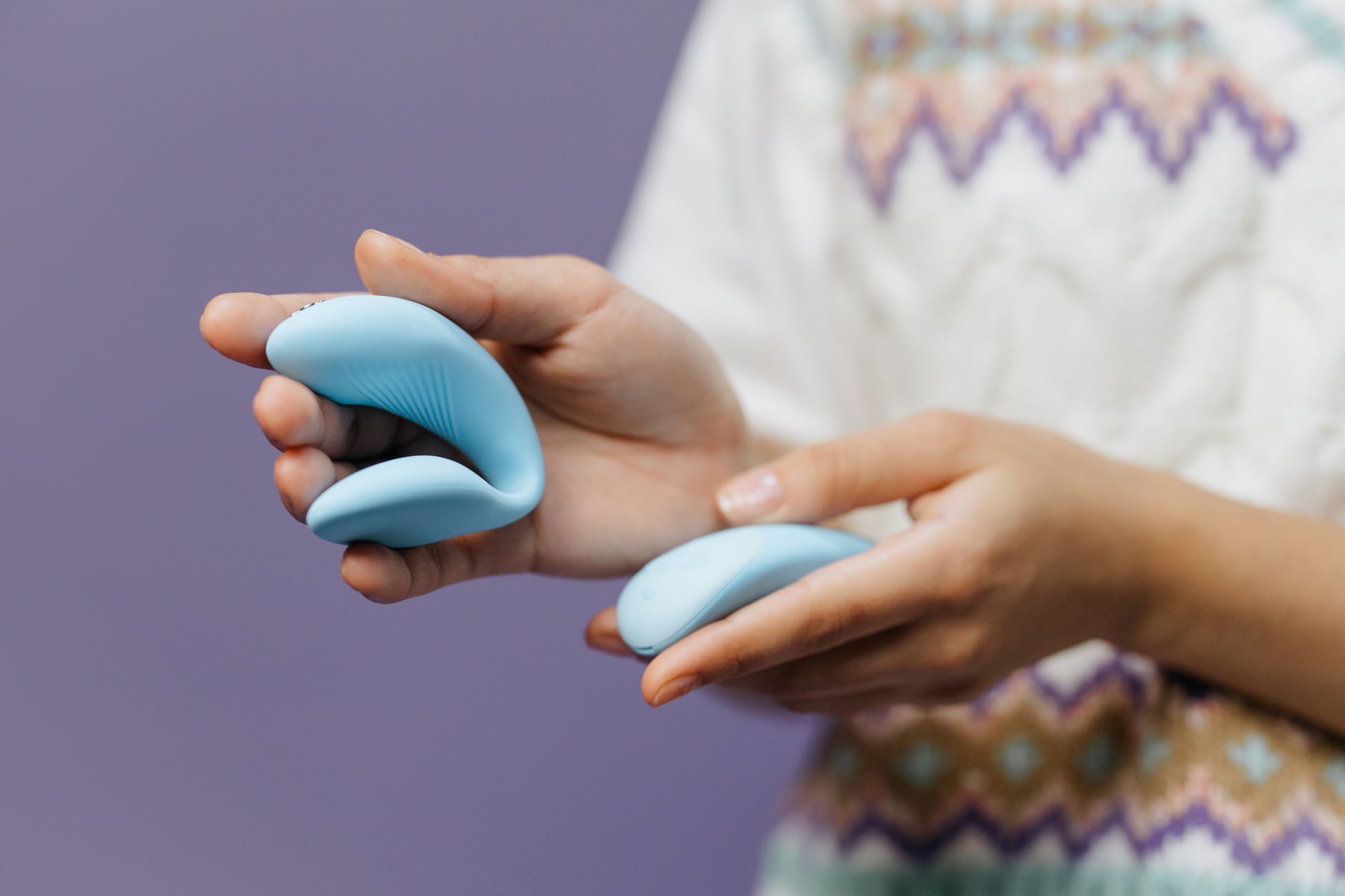
Photo by cottonbro studio on Pexels
What to do if the first time feels weird
It probably will feel a little weird. That's not a failure. That's normal.
Your brain is used to a certain pattern of sensation and rhythm. A vibrator changes that. Your partner is watching you experience something different, which can feel exposing. You're both probably a little self-conscious about whether you're "doing it right," which is a question that doesn't really apply here.
Here's what I tell couples: the first time is data collection, not performance. You're not trying to have an amazing orgasm. You're figuring out what feels good, what doesn't, and what you both want to do differently next time.
Give yourself permission to pause and adjust. "This intensity is too high" or "I like it on this part more" or "Can you hold it steady for a second" are all okay things to say mid-sex. They're not mood killers. They're communication. And communication is actually the thing that makes sex better over time.
If it feels flat or awkward, that might be nervousness. It might be that you picked the wrong position. It might be that the intensity isn't right. It could also be that you need a few tries before your body relaxes enough to feel it the way it will eventually. None of those are reasons to abandon the idea.
The pleasure paradox
Here's what surprises most couples: bringing a vibrator into partnered sex often makes the sex feel more connected, not less.
When you're not focused on whether you're going to orgasm, you can actually be present. You can pay attention to how your partner is touching you elsewhere, what you're feeling, what you want. You can make eye contact without performing it. You can move together instead of following a script.
For a lot of people, especially those who've had trouble orgasming with a partner or who need more stimulation than fingers alone provide, introducing a lemon clitoral vibrator removes a whole layer of anxiety. You're not thinking, "When is this going to happen? Should I fake it? What's wrong with me?" You're thinking, "Oh, there it is. That's what I needed."
Your partner gets to see you feel good without taking all the responsibility for it. That's not a loss. That's a relief.
Building a regular practice
The first time you use a vibrator together is usually either awkward or exciting (and sometimes both). The second time is when you actually start to relax into it.
If you want this to be part of your sex life regularly, a few practical things help. Keep it accessible but not visible if that matters to you. Have a light conversation after about what felt good, so you both know what's working. Don't treat it like an emergency tool that only comes out when something's wrong. Use it because it feels good, which is the whole point.
And remember that some nights you'll use it and some nights you won't. Some seasons of your relationship will involve it more, and some less. That's fine. The goal isn't to make vibrators a requirement. The goal is to expand what feels possible between you.
FAQ: Your questions about partnered vibrator use
Will my partner feel insecure if I use a vibrator during sex?
Insecurity is possible, but it's usually rooted in the myths we talked about earlier. If your partner believes that needing a vibrator means something's wrong with them, that's the conversation to have first. But most of the time, when you actually show someone that a vibrator makes you feel more pleasure and more present with them, insecurity dissolves pretty quickly. The key is framing it as "we're trying something together" not "I need this because you're not enough."
What's the best position to use a lemon clitoral vibrator with a partner?
Depends on the vibrator and what you're doing. If you're using a suction vibrator, missionary or cowgirl works well because it gives you control and keeps you face to face. If you're using a standard vibrator, spooning from behind or you on top gives you easy access to position it. The real answer is whatever lets you feel it without strain and stay connected. That might take a few tries to figure out.
Can I use a vibrator if my partner is already inside me?
Absolutely. The clitoris is separate from the vagina, so using a vibrator on it during penetration just adds sensation. It can actually help with orgasm during partnered sex, which is harder to achieve without external clitoral stimulation. Just make sure you're both comfortable with the positioning and the vibrator isn't getting in the way of movement.
What if my partner wants to hold the vibrator but I want control?
Talk about it before you're already naked. "I think I'd like to direct this one, but I love that you want to be involved." Some partners find it sexy to watch you use it on yourself. Others want the reciprocal experience of doing something for you. You can also trade off. One time they hold it, next time you do. You're not locked into one way.
How do I bring this up if I'm embarrassed?
Write it down first if talking feels too exposing. Text it. "I've been thinking about trying a clitoral vibrator together." You don't need a whole presentation. Short and honest beats eloquent and evasive every time. Your partner would probably rather hear you be awkward about wanting more pleasure than never hear you ask for what you need.
Do I need a special vibrator for partnered sex?
Not really. Any good quality vibrator works with a partner. Clitoral suckers like a lemon sucker are great for couples because the sensation is unique and your partner can stay inside you. Smaller vibrators give you more control. Quieter ones matter if you share a wall. Pick based on what feels good to you first, and the partnered aspect will follow.
Here's the thing about pleasure and partnership
A healthy sex life isn't about both people reaching the same finish line the same way. It's about both people being willing to expand what's possible. When your partner says they want to bring a vibrator into your sex, they're not saying anything's broken. They're saying, "Let's figure this out together."
That's worth showing up for. The conversation is the easy part. The pleasure is the payoff. And the intimacy that comes from being honest about what you actually need? That's the real reason to try.
If you have questions about how to approach this conversation, or if you want more specific guidance on your situation, reach out anytime. That's what I'm here for.