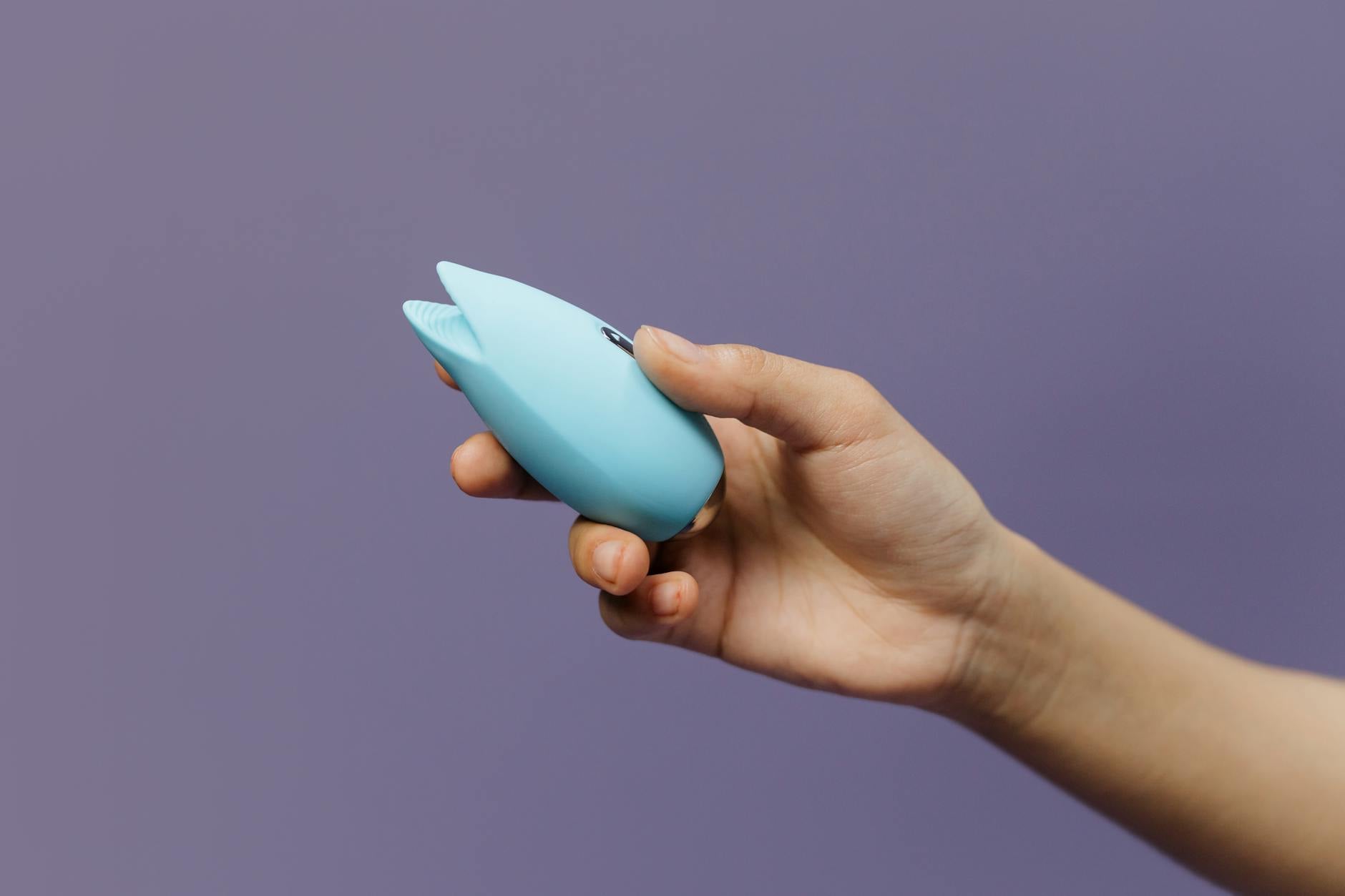
How to Use Lemon Vibrators When You're Returning to Pleasure After a Long Absence
Let's be real: getting back into your body after months or years away feels strange. Your nervous system has learned caution. Your mind is probably narrating doubt. The gap between "I used to enjoy this" and "I want to enjoy this again" can feel impossibly wide.
Here's what I see as a relationship coach working with people navigating this exact territory. The body doesn't forget pleasure. But it does forget the permission to have it. Rebuilding that permission, and the sensation that goes with it, is less about mechanics and more about nervous system repair. And that's where clitoral vibrators, specifically lemon vibrators like the air-suction tools designed for precision stimulation, become unexpectedly useful.
This isn't about forcing yourself back into arousal. It's about meeting your body where it actually is.
Why the absence happened in the first place matters
You stepped away from pleasure for a reason. Maybe your relationship ended and sex felt too entangled with that loss. Maybe illness or medication numbed you, and then numbness became the new normal. Maybe you were touched out by parenting, by work stress, by the simple fact of being alive in 2024. Maybe shame, trauma, or plain exhaustion buried the desire so deep you forgot you'd ever had it.
The reason matters because your nervous system registered whatever happened as either a threat or a shutdown. If you try to jump straight back into intense stimulation, you're essentially asking your nervous system to flip a switch it has learned to keep off. It won't cooperate. And then you'll feel broken, which you're not.
Instead, the most effective restart involves what I call "graduated re-entry." Small, safe, predictable sensations that signal to your body: this is okay. You're safe. You deserve this.
Why lemon clitoral vibrators work better for re-entry than anything else
Most vibrators rely on direct vibration. You press them against sensitive tissue and hope the rhythm works. But when you're returning after a long break, direct pressure can feel too intense, too invasive, or triggering in ways you don't expect.
Lemon vibrators, specifically air-suction clitoral stimulators, work differently. Instead of grinding, they pulse and draw. The sensation is more about the suction effect than the vibration. This matters enormously when you're reclaiming your body because suction stimulation has three distinct advantages for nervous system recovery.
First, it's gentler to numb tissue. If your clitoris has been unresponsive for a while, suction wakes it up more gradually than vibration does. The pulsing action creates a wave of pressure rather than a relentless buzz.
Second, you control the intensity completely. Most lemon vibrators have intensity settings that start whisper-quiet. You're not jumping from zero to level 7. You're beginning at level 1 and staying there as long as you need.
Third, the sensation is fundamentally different from partnered sex. Your body doesn't confuse it with anything else. That separation can be protective when you're untangling pleasure from complicated relationship history.
How to actually start: the first session framework
Don't jump in cold. Spend three to five days just getting familiar with your toy without using it for stimulation. Hold it. Feel the weight. Run it along your inner wrist. Notice the texture, the temperature, the sound it makes. This sounds silly. I promise it's not.
Your nervous system has been on high alert. Introducing something new without letting your brain process it slowly triggers the same threat response that made you numb in the first place.
When you're ready for actual use, choose a time when you're alone and no one will interrupt. Not because you're doing something wrong, but because your nervous system can't access arousal when it's scanning for danger. Set a phone timer for 10 minutes. This is important. A time limit removes the pressure to achieve anything. It signals that this is just exploration, not performance.
Start at the lowest intensity setting. Lower than you think feels good. You're looking for just enough sensation to be noticeable. Build warmth in the area first. Use the lowest setting for 3-5 minutes without expecting anything. Literally nothing. Just sensation.
If you feel arousal building, let it build slowly. Don't speed up the intensity. Let your body learn that arousal can exist without having to go anywhere. Half the people returning to pleasure after an absence are caught in a trap of "it has to lead somewhere." The goal is arousal itself, not the endpoint.
If you feel nothing, that's also fine. Stop when the timer goes off. That's it. You're not broken. You're just recalibrating.
What to expect in the first two weeks
Week one is usually weird. You might feel disconnected. You might notice muscle tension you didn't know was there. You might have emotional responses that feel disproportionate to what's happening physically. All of this is your nervous system processing that touch is safe again.
Week two often brings a subtle shift. Sensation becomes less like touching a stranger's skin and more like touching your own. The numbness doesn't disappear overnight, but it starts to feel less permanent.
Many people report that orgasm, when it arrives, feels different from how they remember it. Sometimes softer. Sometimes more internal. Sometimes delayed. Your body has changed. Your nervous system has changed. The goal isn't to recreate 2015. The goal is to meet who you are now.
Using lemon vibrators with a partner (if that's in your future)
If you're planning to share this with a partner or considering partnered sex again, establish a clear separation between solo recovery and partnered exploration. They're not the same process, and mixing them creates confusion.
Once you've spent 2-3 weeks rebuilding your relationship with solo sensation, you can introduce your partner to the idea. Not in bed. Just in conversation. "I'm exploring what feels good again." That's it. No pressure to involve them.
If you do decide to use a lemon vibrator together, let your partner watch first without touching. Let them understand how it works. Then you take the lead on pressure, angle, and intensity. Your body has the information your nervous system needs. They're there to support, not direct.
The thing nobody talks about: rebuilding takes longer than expected
Most people expect that after a few weeks, sensation will snap back to normal. That's not realistic. Rebuilding the neural pathways between your brain and your pleasure center takes time. You're not damaged. You're just recalibrating.
Some folks find that the first genuine orgasm after a long break arrives in week three. Others take two months. The variation is huge and completely normal. Your timeline isn't wrong. It's just your timeline.
What matters is consistency, not intensity. Using a lemon vibrator for 10 minutes twice a week will produce faster results than an occasional marathon session. Your nervous system learns through repetition that this is safe.
FAQ: returning to pleasure after absence
Is it normal to feel nothing the first time I use a clitoral vibrator?
Completely. Numbness is your nervous system's protection mechanism. It didn't malfunction overnight, so it won't rewaken overnight. You're not broken. You're in the earliest stage of rewiring. Stay consistent, keep expectations low, and sensation will return.
How do I know if I'm being patient enough versus just avoiding arousal?
This is the key question. You're avoiding arousal if you dread the sessions, use them as a chore, or feel relief when they're over. You're being patient if you notice small changes (slightly more sensation, a fleeting moment of warmth, reduced numbness). The difference is measurable progress, however tiny.
Can I use a regular vibrator instead of a suction vibrator like a lemon vibrator?
Yes, but suction vibrators are genuinely easier for nervous system recovery. Direct vibration can feel overstimulating to reconnecting tissue. That said, the best vibrator is the one you'll actually use. If you have a regular vibrator and it feels good, use it. Consistency matters more than perfect equipment.
What if I experience pain instead of numbness?
Stop immediately and talk to your doctor or a pelvic floor physical therapist. Pain during pleasure is different from numbness and usually signals something specific that deserves professional attention. Don't push through it.
Is it weird to use a clitoral vibrator if I haven't had partnered sex in years?
Not even slightly. Your body belongs to you first. Rebuilding your relationship with your own pleasure is the foundation for anything that comes after. Solo sensation is not a consolation prize. It's the ground floor.
How long before I can expect actual orgasms again?
Variably. Some people experience orgasm within the first two weeks if they were numbed by stress or medication. People recovering from deeper disconnection might take 2-4 months. The point isn't speed. It's the fact that sensation returns, and then orgasm follows.
The actual endpoint (spoiler: it's not an endpoint)
One day, maybe three weeks in or maybe three months in, you'll use a lemon vibrator and feel something that reminds you why pleasure matters. It might not be an earth-shattering orgasm. It might just be warmth, or a gentle pulse of arousal, or the absence of numbness.
That moment marks a turning point, but not a finish line. Pleasure doesn't return as one event. It returns as a series of small permissions you keep giving yourself. Keep giving your body the same quiet, consistent attention you've been practicing.
Your nervous system learned it was safe to shut down. It's learning, slowly, that it's also safe to wake up. That's the whole process. And it works.
If you'd like to talk through your specific situation with a trained therapist who specializes in pleasure, intimacy, and nervous system work, reach out to the Lemon Wand team. We can connect you with resources tailored to your story.
Sources & further reading
Bessel van der Kolk, The Body Keeps the Score: Brain, Mind, and Body in the Healing of Trauma (2014). Understanding how trauma and long-term stress affect the nervous system's capacity for pleasure and safety.
Stephen Porges, The Pocket Guide to the Polyvagal Theory (2021). The neurobiological framework for understanding why gradual, predictable sensation helps rewire nervous system responses.
Emily Nagoski, Come As You Are (2015). The relationship between context, safety, and arousal in both partnered and solo exploration.