Let's start with what nobody wants to say out loud
You finish fast, and your partner feels like they're racing to keep up. Or worse, like the sex is over before things actually get started. This isn't a you problem and it's not a them problem. It's a coordination problem, and it's fixable.
The speed at which you come is shaped by a lot of things: how your nervous system is wired, what kind of touch actually works for your body, how aroused you are, and whether you're in your head or actually present. A lemon vibrator can help you navigate all of that. But only if you're using it strategically, not just turning it on and letting it do what it does best (which is, let's be real, get you there quickly).
Why lemon vibrators work so fast (and why that's not always what you want)
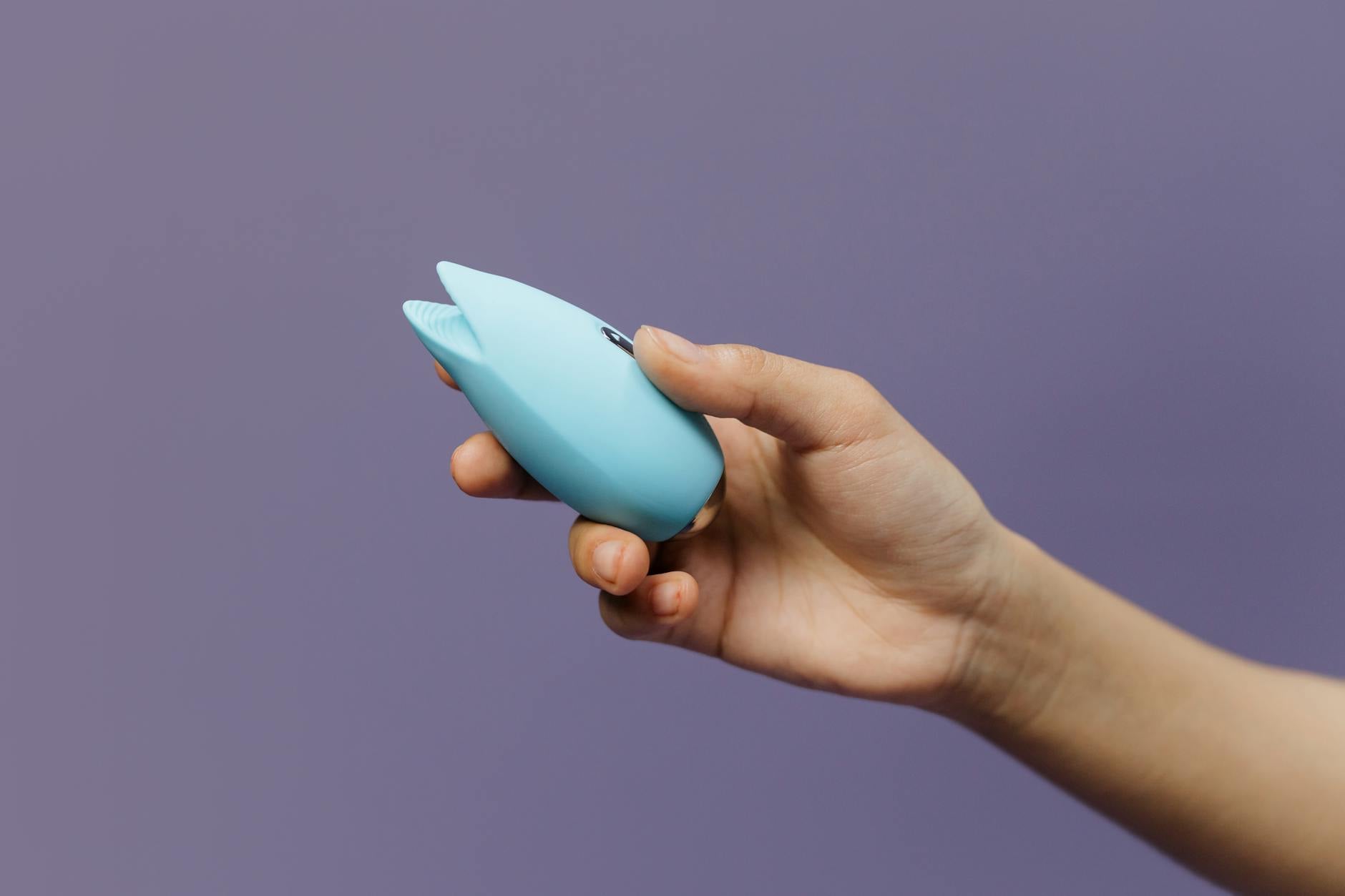
Clitoral suckers like the lemon vibrator use gentle pulsing suction instead of traditional vibration. This approach is wildly efficient at triggering orgasm because it stimulates a huge concentration of nerve endings without requiring friction or pressure. For a lot of people, that means orgasm arrives in five to ten minutes, sometimes less.
When you're alone and want efficiency, that's perfect. When you're with a partner and want to stay connected longer, that same efficiency becomes a barrier.
The good news: the lemon vibrator's design also gives you granular control. You can use different patterns, adjust intensity, pause strategically, and build arousal in layers. Most people just don't know how.
Pattern switching as a pacing tool
The lemon vibrator has multiple patterns. Most people find pattern one (gentle pulse) is the slowest, and intensity increases as you climb the dial. Here's the counterintuitive part: start at pattern one or two.
Lower-intensity patterns feel softer and take longer to build momentum. You're not depriving yourself. You're building arousal gradually instead of sprinting toward the finish line. Stay at a lower pattern for five to ten minutes before increasing intensity. Your body will register progress without arriving too quickly.
The trick is not switching patterns too soon just because you want faster results. Talk with your partner about giving yourself permission to stay in the slower patterns longer. You might discover that gradual arousal actually feels better than quick climax.
Intermittent stimulation changes everything
Here's what most people never try: stop and start.
Use your lemon vibrator for two or three minutes, then put it down. Kiss, touch your partner, talk. Feel what arousal without constant stimulation is like. Then come back to the vibrator. Repeat this cycle three or four times before you're heading toward orgasm.
Intermittent stimulation does two important things. First, it interrupts the pathway to fast orgasm by stopping the continuous buildup. Second, it creates space for actual connection with your partner instead of them watching you use a toy. That's a fundamental difference in the experience.
Your partner might also use this time to touch you in other ways. Your body is already partially aroused, so their touch lands differently. This is how you build the kind of longer, more textured experience that feels less like a solo performance and more like actual shared pleasure.
Positioning yourself for control, not convenience
Where you are when you're using your lemon vibrator matters. A lot of people lie down or recline because it's comfortable. That position also tends to be the one where you come fastest because it's the simplest, most direct stimulation.
Try sitting up slightly or positioning yourself so you're still engaged with your partner visually and physically. Being more upright changes how your body responds to the vibrator. It's not as efficient a position for orgasm, which is exactly the point.
You can also try using the vibrator in different orientations. Some angles of contact are more intense than others. Experimenting with angle and pressure lets you stay longer in the arousal phase instead of tipping into orgasm too quickly.
Temperature and hydration shifts your whole timeline
This sounds small but it's not. When your body is slightly cooler, arousal builds more slowly. When you're very warm, everything speeds up. If fast orgasms are a pattern for you, try using your lemon vibrator in a room that's cooler than you'd normally prefer.
Ditto with hydration and recent food intake. If you've just eaten a large meal or are dehydrated, your nervous system is a bit more sluggish. If you're completely fed and hydrated, you're more responsive. There's no moral value here. You're just noticing the variables that speed you up and strategically adjusting them when you want to slow down.
Mind and breath patterns do the real work
Honestly though, the physical stuff matters less than what's happening in your head and your breathing.
Most people breathe faster and shallower as arousal builds. If you consciously slow your breathing and keep it deeper, you also slow arousal. This is not zen hand-waving. This is your nervous system responding directly to your respiration. Slower breathing equals slower arousal.
Mind-wise, check in with yourself. Are you thinking about coming, or are you thinking about sensation and connection? The moment you start anticipating orgasm, your body accelerates toward it. If you keep attention on the actual feeling of the vibrator and on your partner, you stay longer in the arousal phase.
Communicate this with your partner. Tell them you're working on pacing. Ask them to keep eye contact or touch, something that anchors you in the present moment instead of in the goal of finishing.
When to use lemon vibrators alongside other touch
The fastest way to extend the timeline is to not rely only on the vibrator. Use it alongside your partner's hands or mouth. The combination of sensations is more complex and therefore takes longer to build toward orgasm.
You can also try using lemon vibrators when you want to explore with a partner for the first time, which gives you a foundation for understanding what partnered play can feel like. But once you're comfortable, layering in more manual contact genuinely changes the pacing.
The vibrator becomes an accent rather than the main event. This shift often makes the entire experience feel more connected, not just slower.
Communication as the actual tool
None of this works without talking about it first. Fast orgasms can carry shame, especially if a partner has made you feel like it's a problem. It's not. But the desire to extend pleasure together is real, and it deserves a straightforward conversation.
Tell your partner what you're going to try. Ask them to let you know if the pacing feels better for them. Check in after. This removes the performance pressure and makes the whole thing collaborative instead of something you're doing in response to their implied criticism.
Also, here's what's worth knowing: a lot of people report that once they stop treating fast orgasms as something to fix, they naturally start lasting longer. The anxiety about coming too quickly was often doing more to speed things up than anything else.
A note on medication and body changes
If you've recently started antidepressants or other medications that affect arousal, fast orgasms might actually be your body recalibrating. Give yourself time before you assume pacing is a long-term issue. Same applies if you're navigating hormonal changes. How to use lemon vibrators when sensation changes after starting new medications covers this in detail.
If pacing has always been a pattern for you, that's just your wiring. Nothing wrong with it. But if it's new or causing friction with your partner, paying attention to the variables above will help.
Frequently asked questions
Can using lower patterns on my lemon vibrator really extend orgasm timing?
Yes. Lower patterns create slower arousal buildup. The key is resisting the urge to turn up intensity too quickly just because you're impatient. Staying at pattern one or two for longer actually feels better to most people than cranking to the highest setting immediately.
Should I tell my partner I'm slowing down on purpose?
Absolutely. This isn't a secret technique. It's a collaborative choice. Your partner will notice the difference in pacing and might feel confused if you don't explain you're being intentional about it. A quick conversation makes everything less weird and more connected.
Does stopping and starting actually work, or does it just frustrate your body?
It works. The interruption breaks the arousal momentum. You might feel frustrated for the first thirty seconds after stopping, but then you settle back into baseline. When you start again, your body registers a new surge of sensation rather than a continuous wave. It genuinely changes the timeline.
What if my partner finds it frustrating when I pause using the vibrator?
That's worth exploring together. Sometimes a partner worries that pauses mean you've lost interest. Other times they're frustrated because they're close to coming and you've stopped. Communication here is essential. You might need to pace your vibrator use around your partner's arousal, not just your own.
Can I use lemon vibrators alongside other toys for longer sessions?
You can, but it's often more effective to layer in manual touch rather than multiple toys. Two simultaneous sources of stimulation create more complex sensation, which naturally takes longer to process into orgasm. This is especially true if you're using the vibrator plus a partner's hands or mouth.
Is there a rhythm or pattern to pacing that works for most people?
Two to three minutes at low pattern, stop for thirty seconds to two minutes, repeat that cycle three times, then increase pattern and intensity as you approach orgasm. But everyone's body is different. You'll find your own sweet spot by experimenting and staying tuned to what actually slows you down versus what just delays things temporarily.
The bigger picture
Fast orgasms aren't a defect. But if you and your partner want to build longer, more connected sessions, your lemon vibrator can absolutely help you get there. The tool is designed for precise, responsive pleasure. Using it strategically instead of just turning it on is the difference between rushing through sex and actually savoring it.
If you want to dig deeper into how your body responds to different types of touch, exploring partnered pleasure after years of solo play is a good starting point. The fundamentals are the same: intention, communication, and willingness to slow down enough to actually feel what's happening.
Your pleasure timeline is part of your sexual fingerprint. Once you understand it, you can work with it instead of against it.